

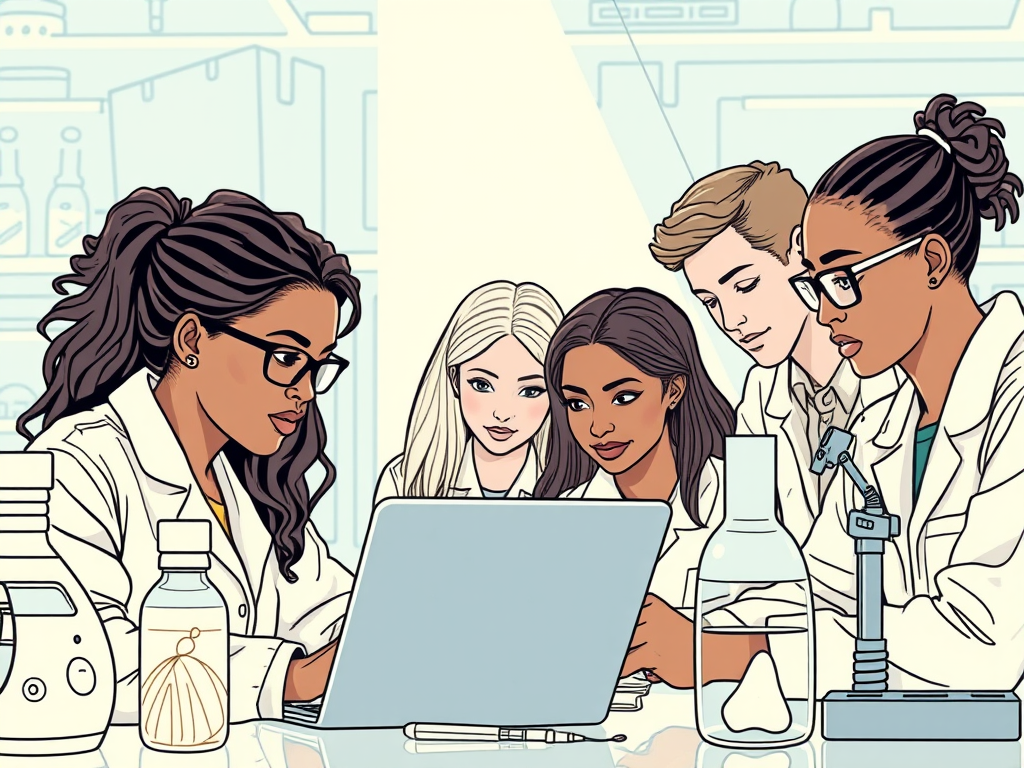
The world of science is changing faster than ever.
A decade ago, many of today’s fastest-growing careers barely existed.
A decade from now, entirely new scientific roles will emerge again.
For students in Class 11 and 12 — especially those preparing for Engineering and Medical careers — one truth is clear:
The future will reward those who prepare early.
Marks are important.
Concept clarity is essential.
But future-ready skills? Absolutely critical.
Let’s explore the scientific fields shaping tomorrow — and the skills students must start building today.
1. AI & Data Science: The Intelligence Revolution
Artificial Intelligence is no longer science fiction.
It powers:
- Medical diagnostics
- Self-driving systems
- Financial predictions
- Climate modeling
- Drug discovery
Data is the new fuel of innovation. And those who know how to interpret it hold tremendous power.
Careers in This Space Include:
- AI Engineer
- Machine Learning Researcher
- Data Scientist
- Robotics AI Specialist
- Computational Biologist
Even traditional Engineering and Medical fields are integrating AI deeply.
Doctors use AI-assisted imaging tools.
Engineers design AI-driven automation systems.
Skills to Start Building:
- Strong mathematics (especially statistics and probability)
- Logical reasoning
- Basic programming knowledge
- Analytical thinking
- Curiosity about how systems learn
Students don’t need advanced coding immediately.
But developing structured thinking and problem-solving ability now gives them a massive advantage later.
2. Biotechnology: Engineering Life Itself
Biotechnology is transforming healthcare, agriculture, and environmental science.
From gene editing to vaccine development, this field blends biology with technology.
The pandemic showed the world how critical biotechnology research is.
Future breakthroughs may come in:
- Personalized medicine
- Genetic therapies
- Sustainable biofuels
- Disease-resistant crops
Careers in Biotechnology:
- Genetic Engineer
- Biomedical Researcher
- Pharmaceutical Scientist
- Clinical Research Associate
- Bioinformatics Specialist
This field demands both scientific rigor and ethical responsibility.
Skills to Start Building:
- Strong foundation in Biology and Chemistry
- Research curiosity
- Precision and attention to detail
- Ethical awareness
- Scientific reading habits
Students who enjoy understanding how living systems function will thrive here.
3. Robotics: Where Engineering Meets Intelligence
Robotics is no longer limited to factories.
Today, robots assist in:
- Surgery
- Disaster response
- Space exploration
- Warehouse automation
- Domestic tasks
Robotics combines mechanical engineering, electronics, AI, and programming.
It is one of the most interdisciplinary scientific careers.
Future Roles Include:
- Robotics Engineer
- Automation Specialist
- Mechatronics Expert
- Autonomous Systems Designer
Skills to Build Early:
- Strong physics fundamentals
- Logical thinking
- Creativity in problem-solving
- Hands-on experimentation mindset
- Interest in mechanics and systems
Robotics rewards students who enjoy building, testing, and improving systems.
4. Research & Innovation: The Foundation of All Progress
Behind every technological breakthrough is research.
Research careers are not limited to laboratories. They exist in:
- Universities
- Corporate R&D departments
- Space agencies
- Pharmaceutical companies
- Technology startups
Researchers push boundaries. They ask questions others haven’t thought of yet.
Skills That Define Great Researchers:
- Deep curiosity
- Patience
- Critical thinking
- Strong writing skills
- Ability to analyze data objectively
Research is not about memorizing answers.
It’s about discovering new ones.
Students who learn to ask “why” and “how” early build the mindset of innovators.
5. Adaptability: The Most Important Skill of All
Here’s the reality:
The exact job titles of 2035 may not exist yet.
Technology evolves.
Industries shift.
Tools change rapidly.
Students who cling only to one narrow skill may struggle.
But those who build adaptability will thrive.
Adaptability means:
- Learning new technologies quickly
- Staying updated with scientific advancements
- Being open to interdisciplinary work
- Embracing continuous learning
In the future, the ability to learn may be more important than what you already know.
Why Students Must Start Now
Many students believe future skills can be built in college.
That’s partially true.
But early exposure creates confidence and clarity.
Class 11 and 12 are powerful years because:
- Foundations are built here
- Analytical thinking develops here
- Study discipline strengthens here
Strong fundamentals in Physics, Chemistry, Mathematics, and Biology are not just exam requirements.
They are the building blocks of future innovation.
The Role of Academic Guidance in Future Career Preparation
Preparing students only for exams is not enough anymore.
At Khandelwal Classes, academic preparation is designed to:
- Strengthen conceptual understanding
- Encourage analytical thinking
- Promote curiosity beyond textbooks
- Build discipline and structured study habits
- Prepare students for competitive environments
When fundamentals are strong, transitioning into advanced scientific fields becomes smoother.
Career success in AI, Biotechnology, Robotics, or Research begins with clarity in core subjects.
The Mindset of Future Scientists
The students who will shape tomorrow’s world will share certain traits:
They won’t just study chapters.
They will explore concepts.
They won’t fear complex problems.
They will break them down logically.
They won’t stop learning after exams.
They will stay curious for life.
Scientific careers are not only about intelligence.
They are about persistence, creativity, and adaptability.
Final Thought
The future of science is exciting.
Artificial Intelligence is expanding possibilities.
Biotechnology is redefining healthcare.
Robotics is transforming industries.
Research is unlocking unknown frontiers.
Students today stand at the edge of extraordinary opportunity.
Start building:
Strong fundamentals.
Logical thinking.
Curiosity.
Confidence.
Adaptability.
Because the careers of tomorrow belong to those who prepare today.
And the journey begins with the skills you choose to develop now.
Leave a Reply