

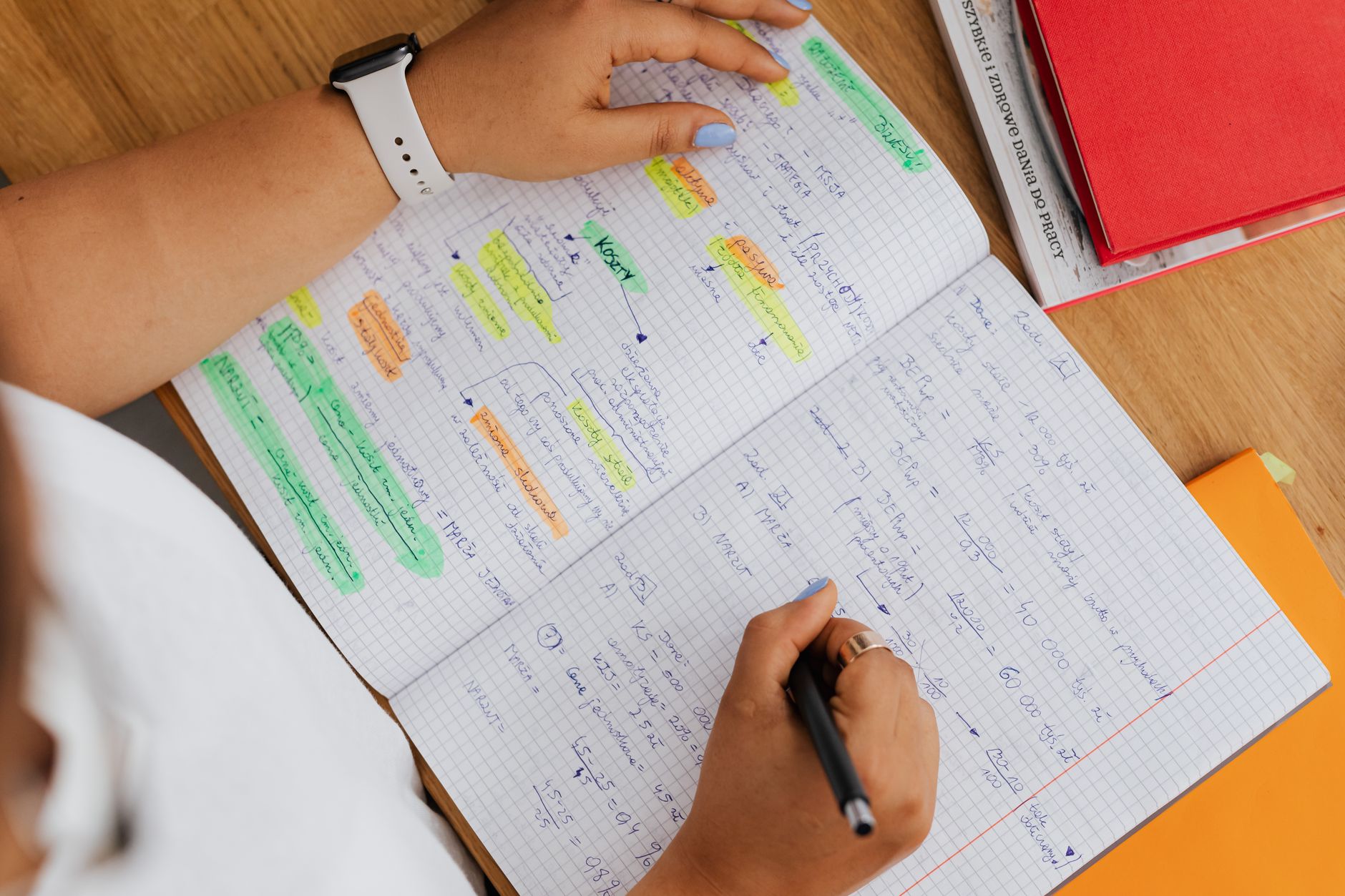
Preparing for Class 11, Class 12, JEE, NEET, or MHT-CET often leads students to believe they should spend four or five hours studying a single subject before moving to the next. While this “marathon study session” can feel productive, educational research suggests there is another strategy that can improve long-term learning—the Interleaving Technique.
The Interleaving Technique involves alternating between different but related subjects or topics during a study session instead of completing one subject in a single block. This approach challenges your brain to retrieve information repeatedly, strengthening memory and improving your ability to apply concepts in different situations.
That does not mean blocked study is ineffective. In fact, blocked study is useful when learning an entirely new topic. However, once you have built a basic understanding, the Interleaving Technique often becomes more effective for revision and exam preparation.
In this guide, you’ll learn:
- What the Interleaving Technique is
- Interleaving vs blocked study
- What research says about retention
- A weekly study schedule template
- Common mistakes to avoid
- How to apply the Interleaving Technique for competitive exams
What Is the Interleaving Technique?
The Interleaving Technique is a study method where students switch between different subjects or problem types during a study session rather than focusing on only one topic for several hours.
For example:
Instead of studying:
- Physics – 4 hours
You could study:
- Physics – 60 minutes
- Chemistry – 60 minutes
- Mathematics – 60 minutes
- Biology or Revision – 60 minutes
Each switch forces your brain to retrieve different concepts, improving understanding and long-term retention.
The Interleaving Technique is especially effective once the fundamentals of each subject have been learned.
Interleaving vs Blocked Study
Many students ask which method is better.
The answer depends on where you are in the learning process.
| Feature | Interleaving Technique | Blocked Study |
|---|---|---|
| Best for revision | ✅ Yes | Limited |
| Best for learning a new concept | Sometimes | ✅ Yes |
| Improves long-term retention | ✅ Yes | Moderate |
| Encourages problem-solving | ✅ Yes | Less |
| Prevents boredom | ✅ Yes | Sometimes |
| Builds concept discrimination | ✅ Yes | Limited |
A good preparation strategy combines both methods.
Use blocked study to understand new concepts.
Use the Interleaving Technique to retain and apply them.
Why the Interleaving Technique Works
Your brain learns better when it has to retrieve information repeatedly instead of repeating the same task continuously.
When you solve twenty identical Physics problems in a row, your brain starts following a pattern without much effort.
However, when you alternate between Physics, Chemistry, and Mathematics, your brain must identify:
- Which concept applies?
- Which formula should be used?
- Which solving strategy is appropriate?
This process strengthens memory and develops flexible thinking.
Research in cognitive psychology has consistently shown that interleaved practice can improve long-term retention and transfer of learning, particularly after the initial learning phase.
Benefits of the Interleaving Technique
Students preparing for competitive exams can benefit in several ways.
Better Long-Term Memory
Frequent switching encourages active recall instead of passive repetition.
As a result, concepts remain in memory for longer.
Improved Problem Recognition
Competitive exams rarely present questions chapter by chapter.
Instead, students must recognise which concept applies.
The Interleaving Technique trains exactly this skill.
Reduced Study Fatigue
Studying one subject continuously for several hours often leads to mental exhaustion.
Changing subjects helps maintain focus and keeps study sessions engaging.
Better Exam Readiness
JEE, NEET, and MHT-CET papers contain questions from multiple chapters and subjects.
The Interleaving Technique closely mirrors the actual exam experience.
Weekly Study Schedule Using the Interleaving Technique
Here’s an example timetable for a student preparing for competitive exams.
| Day | Session 1 | Session 2 | Session 3 | Session 4 |
|---|---|---|---|---|
| Monday | Physics | Chemistry | Mathematics | Revision |
| Tuesday | Biology | Physics | Chemistry | MCQ Practice |
| Wednesday | Mathematics | Biology | Physics | Error Analysis |
| Thursday | Chemistry | Mathematics | Biology | Revision |
| Friday | Physics | Chemistry | Mock Test Questions | Review |
| Saturday | Full-Length Mock Test | Analysis | Weak Areas | Revision |
| Sunday | Formula Revision | Previous Year Questions | Doubt Solving | Planning |
This schedule keeps learning balanced while preventing monotony.
Retention Improvement: What Research Suggests
Educational research indicates that interleaved practice can outperform blocked practice in tasks requiring concept selection and long-term retention.
Some studies have reported measurable improvements in delayed test performance compared with repeated blocked practice, although results vary depending on the subject, learner, and task.
The most important takeaway is not a specific percentage improvement but the principle:
Students who repeatedly retrieve different concepts generally retain information better over time than those who simply repeat the same type of problem.
When Blocked Study Is the Better Choice
The Interleaving Technique is not the answer to every learning situation.
Blocked study is preferable when:
- Learning a completely new chapter
- Understanding difficult derivations
- Reading theory for the first time
- Building foundational concepts
- Practising a brand-new question type
Once these basics are established, transition to interleaving for revision and mixed practice.
Common Mistakes Students Make
Avoid these common errors:
❌ Switching subjects every 10–15 minutes
❌ Studying unrelated topics without a plan
❌ Using interleaving before understanding basic concepts
❌ Ignoring revision sessions
❌ Skipping mock test analysis
❌ Mistaking frequent switching for productive learning
Remember, the Interleaving Technique is about thoughtful variety—not random multitasking.
A Simple 7-Day Implementation Plan
Day 1
Use blocked study to learn a new concept.
Day 2
Mix yesterday’s topic with another familiar subject.
Day 3
Solve mixed MCQs.
Day 4
Add previous year’s questions.
Day 5
Review mistakes.
Day 6
Attempt a timed mixed-subject practice session.
Day 7
Revise formulas, concepts, and weak areas.
Following this cycle each week helps strengthen memory while improving exam readiness.
Student Checklist
Before ending each study day, ask yourself:
✔ Did I revise more than one subject today?
✔ Did I actively recall concepts instead of rereading notes?
✔ Did I solve mixed-question sets?
✔ Did I review my mistakes?
✔ Did I balance theory with practice?
✔ Did I follow my timetable?
How Khandelwal Classes Helps Students Study Smarter
At Khandelwal Classes, we encourage students to combine evidence-based learning strategies with structured academic preparation. Our faculty help students create balanced study plans, practise mixed-question sets, analyse mock tests, and strengthen long-term retention through regular revision and concept-focused teaching.
Instead of relying only on long study hours, students learn how to study efficiently and consistently throughout the academic year.
Conclusion
The Interleaving Technique is one of the most effective study strategies for students preparing for Class 11, Class 12, JEE, NEET, and MHT-CET. By mixing subjects after the initial learning phase, you train your brain to retrieve information, recognise patterns, and solve problems more effectively.
Remember, blocked study and interleaving are not competing methods—they complement each other. Learn new concepts with focused study, then use the Interleaving Technique to strengthen retention, improve confidence, and prepare for exam conditions.
Study smarter, stay consistent, and let every study session move you closer to your goals.
Internal Links
- https://khandelwalclasses.com/2026/07/19/mht-cet-chemistry-90-percentile/
- https://khandelwalclasses.com/2026/07/18/inconsistent-mock-test-scores/
- https://khandelwalclasses.com/2026/07/17/organic-chemistry-for-jee/
- https://khandelwalclasses.com/2026/07/12/study-timetable-for-class-11/
- https://khandelwalclasses.com/2026/07/13/result-season-anxiety/
- https://khandelwalclasses.com/courses-programs-2/
External References
FAQs
1. What is the Interleaving Technique?
The Interleaving Technique is a study strategy where students alternate between different subjects or problem types instead of studying one subject continuously for several hours.
2. Is the Interleaving Technique better than blocked study?
Not always. Blocked study is ideal for learning new concepts, while the Interleaving Technique is generally more effective for revision, long-term retention, and applying knowledge.
3. Can I use the Interleaving Technique for JEE and NEET preparation?
Yes. It is especially useful during revision because these exams require students to switch between different concepts and subjects quickly.
4. How long should each interleaved study session be?
Most students benefit from study blocks of 45–90 minutes before switching to another subject.
5. Does the Interleaving Technique improve memory?
Research suggests that interleaved practice can improve long-term retention and help students identify the correct strategy for different types of problems.
6. Should beginners use interleaving immediately?
No. Beginners should first build a foundation using blocked study before gradually introducing the Interleaving Technique.
7. What is the biggest mistake when using the Interleaving Technique?
Switching subjects too frequently or without a clear plan. The technique works best when study sessions are organised and purposeful.
Leave a Reply