

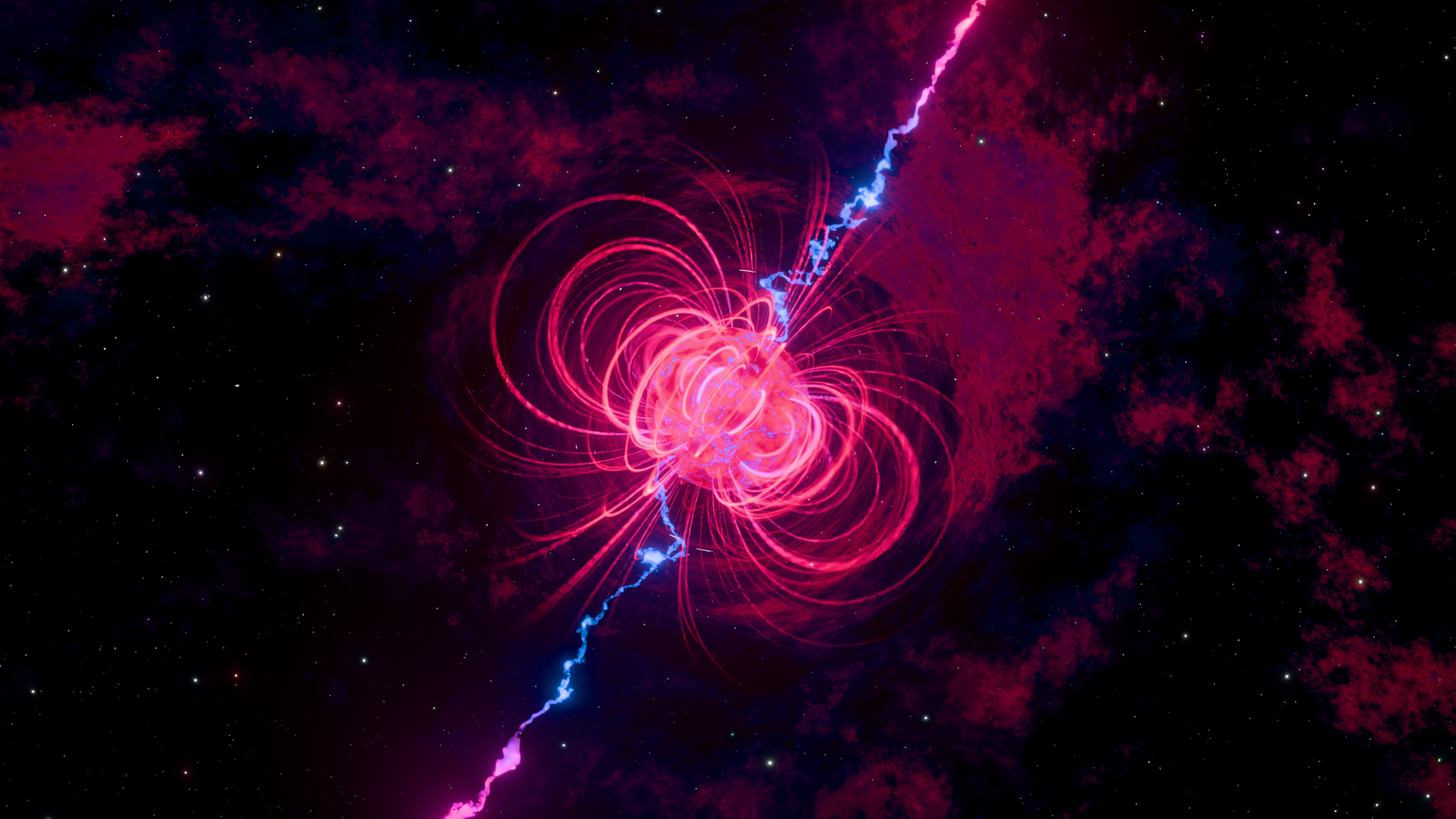
Magnetic Effects of Current is one of the most important chapters in JEE Physics because it tests more than formula memorisation.
Many students know the formulas for the magnetic field due to a wire, circular loop, solenoid, or toroid. Yet they still make mistakes because they are unsure about which formula to use in a particular problem.
The real skill is recognising the geometry of the problem.
Should you use the Biot-Savart Law?
Is Ampere’s Law more suitable?
Is the problem based on a long straight conductor, circular loop, solenoid, or toroid?
Once you identify the correct physical model, many apparently difficult questions become much more manageable.
This guide explains how to select the right approach and covers six recurring problem types that JEE aspirants should practise carefully.
Why Magnetic Effects of Current Matters in JEE
Questions from this chapter frequently test:
- Magnetic field due to current-carrying conductors
- Biot-Savart Law
- Ampere’s Circuital Law
- Magnetic field due to straight wires
- Circular current loops
- Solenoids
- Toroids
- Superposition of magnetic fields
- Direction using the right-hand rule
- Symmetry-based reasoning
The difficulty is often not the final calculation.
The difficulty is deciding:
Which law gives the magnetic field most efficiently?
That is why formula selection is a core JEE skill.
Biot-Savart Law vs Ampere’s Law
The first major decision is choosing between these two methods.
When to Use Biot-Savart Law
The Biot-Savart Law is generally useful when you need to calculate the magnetic field produced by individual current elements.
It is especially useful for:
- Finite straight wires
- Circular current loops
- Arcs
- Non-uniform or irregular current distributions
- Situations where the magnetic field does not have sufficient symmetry for Ampere’s Law to simplify the calculation
The important idea is:
Use Biot-Savart when you need to build the magnetic field from current elements.
For a long straight wire, the result is:B=2πrμ0I
The direction is determined using the right-hand thumb rule.
When to Use Ampere’s Law
Ampere’s Law becomes powerful when the current distribution has strong symmetry.
It is especially useful for:
- Infinitely long straight wires
- Long solenoids
- Toroids
- Cylindrical current distributions
The key question is:
Can I choose an Amperian loop on which the magnetic field has a constant magnitude or a simple symmetry?
If yes, Ampere’s Law may be the fastest method.
B=2πrμ0I
7 A upward current: counterclockwise field.
Direction↑↓
↑↓
Strength
A
A Simple Formula-Selection Decision Process
When you see a magnetic field problem, follow this sequence:
Step 1: Identify the Current Distribution
Ask:
- Is the conductor straight?
- Is it circular?
- Is it finite?
- Is it wound into a solenoid?
- Is it formed into a toroid?
Step 2: Check the Symmetry
Ask:
Does the magnetic field have the same magnitude along a convenient closed path?
If yes, Ampere’s Law may be useful.
Step 3: Check the Geometry
For a circular loop or finite wire, Biot-Savart is often the natural method.
Step 4: Apply Superposition
If multiple wires or current elements are present, calculate their contributions and add the magnetic fields vectorially.
Problem Type 1: Magnetic Field Due to a Long Straight Wire
This is one of the most common JEE problem types.
For a long straight current-carrying conductor:B=2πrμ0I
where:
- I is the current
- r is the perpendicular distance from the wire
The magnetic field lines form concentric circles around the wire.
Direction
Use the right-hand thumb rule:
- Thumb → direction of current
- Curled fingers → direction of magnetic field
Common JEE Variations
Questions may involve:
- Two parallel wires
- Opposite current directions
- Zero-field points
- Magnetic field at a point between conductors
- Magnetic field at a point outside the wires
The most common mistake is treating magnetic field as a scalar.
It is a vector.
Always determine the direction before adding fields.
Problem Type 2: Magnetic Field Due to a Circular Current Loop
A circular loop is usually approached using the Biot-Savart Law.
At the centre of a circular loop:B=2Rμ0I
For N turns:B=2Rμ0NI
where R is the radius of the loop.
The direction is found using the right-hand rule.
Curl your fingers in the direction of current.
Your thumb gives the direction of the magnetic field at the centre.
Common Variations
JEE questions may ask about:
- Multiple loops
- Coaxial loops
- Opposite currents
- Magnetic field at the centre
- Magnetic field along the axis
The most important habit is to draw the direction of each magnetic field before calculating the net result.
Problem Type 3: Magnetic Field Due to an Arc
A current-carrying circular arc produces a magnetic field at its centre.
For an arc subtending angle θ in radians:B=4πRμ0Iθ
This formula is especially useful for:
- Semicircular wires
- Quarter-circle wires
- Circular arcs combined with straight segments
For a semicircle:θ=π
Therefore:B=4Rμ0I
The straight radial portions may contribute zero magnetic field at the centre if the current elements are directed radially relative to the observation point, because:dl×r^=0
This is a classic JEE observation.
Do not calculate contributions from every segment automatically.
First check whether the geometry makes a contribution zero.
Problem Type 4: Solenoid Problems
A long solenoid is one of the best applications of Ampere’s Law.
The magnetic field inside a long solenoid is approximately:B=μ0nI
where:
- n is the number of turns per unit length
- I is the current
If the solenoid has N turns and length L:n=LN
Therefore:B=μ0LNI
For an ideal long solenoid:
- The field inside is approximately uniform.
- The field outside is approximately zero.
JEE Problem Variations
Questions may involve:
- Changing current
- Changing number of turns
- Two solenoids
- Magnetic field comparison
- A material core
- Force on a charged particle inside the field
Common Trap
Do not confuse:N
with:n
N is the total number of turns.
n is the number of turns per unit length.
Problem Type 5: Toroid Problems
A toroid is essentially a solenoid bent into a circular shape.
For an ideal toroid:B=2πrμ0NI
where:
- N is the number of turns
- I is the current
- r is the distance from the centre of the toroid
The field exists primarily inside the toroidal core.
Outside an ideal toroid, the magnetic field is approximately zero.
Why Ampere’s Law Works So Well
Choose a circular Amperian loop of radius r.
The magnetic field has the same magnitude at every point on that loop.
Therefore:B(2πr)=μ0NI
which gives:B=2πrμ0NI
Common JEE Trap
The field inside a toroid depends on r.
Therefore, the magnetic field is not necessarily uniform throughout the entire thickness of the toroid.
Problem Type 6: Multiple Conductors and Superposition
This is one of the most frequently tested patterns.
If several current-carrying wires produce magnetic fields at the same point:Bnet=B1+B2+B3+⋯
The correct process is:
Step 1: Find the magnitude of each field.
Step 2: Determine the direction of each field.
Step 3: Add them vectorially.
For fields in the same direction:Bnet=B1+B2
For opposite directions:Bnet=∣B1−B2∣
The direction should always be established before performing the final calculation.
The Six Recurring JEE Problem Archetypes
Let’s summarise the six patterns.
| Problem Type | Best Initial Approach |
|---|---|
| Long straight wire | Ampere’s Law or standard result |
| Circular loop | Biot-Savart Law |
| Circular arc | Biot-Savart Law |
| Long solenoid | Ampere’s Law |
| Toroid | Ampere’s Law |
| Multiple conductors | Superposition |
This table is not an absolute rule for every possible problem.
The geometry and assumptions always matter.
But it is an excellent starting point for JEE problem-solving.
The Most Common Formula-Selection Mistakes
Mistake 1: Using Ampere’s Law Everywhere
Ampere’s Law is always valid in the appropriate theoretical framework, but it is not always useful for directly calculating B.
The real issue is symmetry.
If the magnetic field varies unpredictably along your chosen loop, Ampere’s Law may not simplify the calculation.
Mistake 2: Ignoring Direction
Two magnetic fields of equal magnitude may:
- Add
- Cancel
- Produce a different resultant direction
Always use the right-hand rule.
Mistake 3: Confusing Distance Variables
In different formulas:
- R may represent the radius of a loop.
- r may represent distance from a wire.
- r may represent distance from the axis of a toroid.
Do not blindly substitute values.
First identify what the variable represents physically.
Mistake 4: Forgetting Symmetry
Before calculating, ask:
Does the geometry make the magnetic field uniform along a path?
This one question often tells you whether Ampere’s Law is a good choice.
A Practical JEE Study Strategy
Phase 1: Learn the Physical Picture
Understand:
- Magnetic field lines
- Right-hand rules
- Current direction
- Field direction
- Symmetry
Do not begin with formula memorisation alone.
Phase 2: Build a Formula Sheet
Your formula sheet should include:
- Long straight wire
- Circular loop
- Circular arc
- Solenoid
- Toroid
Next to every formula, write:
When do I use this?
This is more useful than simply writing the equation.
Phase 3: Practise by Problem Type
Do not randomly solve 50 questions initially.
Instead, solve groups:
- 10 straight-wire problems
- 10 loop problems
- 10 arc problems
- 10 solenoid problems
- 10 toroid problems
- 10 superposition problems
This helps your brain recognise patterns.
Phase 4: Mix the Questions
Once you understand each category, mix the questions.
Now ask yourself:
Which method should I use?
This is where actual JEE-level improvement begins.
A Fast Revision Framework
Before solving a problem, ask:
1. What is the current geometry?
Straight wire, loop, arc, solenoid, or toroid?
2. What is the observation point?
Centre, axis, outside, inside, or between conductors?
3. Is there symmetry?
If yes, Ampere’s Law may be efficient.
4. What is the direction of the field?
Use the right-hand rule.
5. Are there multiple contributions?
Apply superposition.
This five-question framework can prevent many avoidable mistakes.
How Khandelwal Classes Helps JEE Aspirants
JEE Physics requires more than memorising equations.
Students need to develop the ability to:
- Identify the correct physical model
- Select the appropriate law
- Visualise directions
- Recognise recurring problem patterns
- Solve under time pressure
At Khandelwal Classes, JEE aspirants can strengthen their Physics preparation through concept-focused learning, structured problem practice, and systematic revision.
The goal is not to memorise every formula separately.
The goal is to understand why a particular formula or law fits a particular problem.
Conclusion
Magnetic Effects of Current becomes significantly easier when you stop treating it as a collection of disconnected formulas.
The central strategy is:
Identify the geometry → check the symmetry → choose the law → determine the direction → apply superposition if necessary.
Use Biot-Savart Law when the magnetic field must be calculated from current elements, especially for loops, arcs, and finite conductors.
Use Ampere’s Law when strong symmetry makes the magnetic field simple along a suitable closed path, particularly for long wires, solenoids, and toroids.
For JEE preparation, practise the six recurring problem types separately first, then mix them together. This develops the most important skill in the chapter:
Knowing not just how to solve a problem, but which method to choose before solving it.
INTERNAL LINKS
- Rotational Dynamics for JEE: MOI, Angular Momentum, and Recurring Problem Types
- Organic Chemistry for JEE: Mastering Named Reactions
- Electrochemistry for JEE: Nernst Equation and High-Yield Numericals
- Why Toppers Say They Study Less: The Efficiency Mindset Explained
- Thermodynamics for JEE: First Law, Carnot, and Sign Convention
- JEE Preparation Courses at Khandelwal Classes
EXTERNAL REFERENCES
FAQs
1. When should I use Biot-Savart Law in JEE Physics?
Biot-Savart Law is particularly useful for calculating magnetic fields due to current elements, circular loops, arcs, and finite conductors.
2. When is Ampere’s Law useful?
Ampere’s Law is most useful when the current distribution has strong symmetry, such as in long straight wires, solenoids, and toroids.
3. Is Ampere’s Law always better than Biot-Savart Law?
No. The best method depends on the geometry and symmetry of the problem. Ampere’s Law may be theoretically applicable but not computationally useful without sufficient symmetry.
4. What is the magnetic field inside a long solenoid?
For an ideal long solenoid, the magnetic field is approximately proportional to the number of turns per unit length and the current.
5. What is the magnetic field inside a toroid?
For an ideal toroid, the magnetic field depends on the number of turns, current, and radial distance from the centre of the toroid.
6. What are the most common Magnetic Effects of Current problems in JEE?
Common problem types include straight wires, circular loops, arcs, solenoids, toroids, and superposition of magnetic fields from multiple conductors.
7. How can I improve formula selection in Magnetic Effects of Current?
Practise problems by category first. Then solve mixed questions and force yourself to identify the geometry and choose the method before looking at the formula.
8. Is Magnetic Effects of Current important for JEE?
Yes. It is an important part of JEE Physics and also connects with topics such as moving charges, electromagnetic induction, and broader electromagnetism.
Leave a Reply