

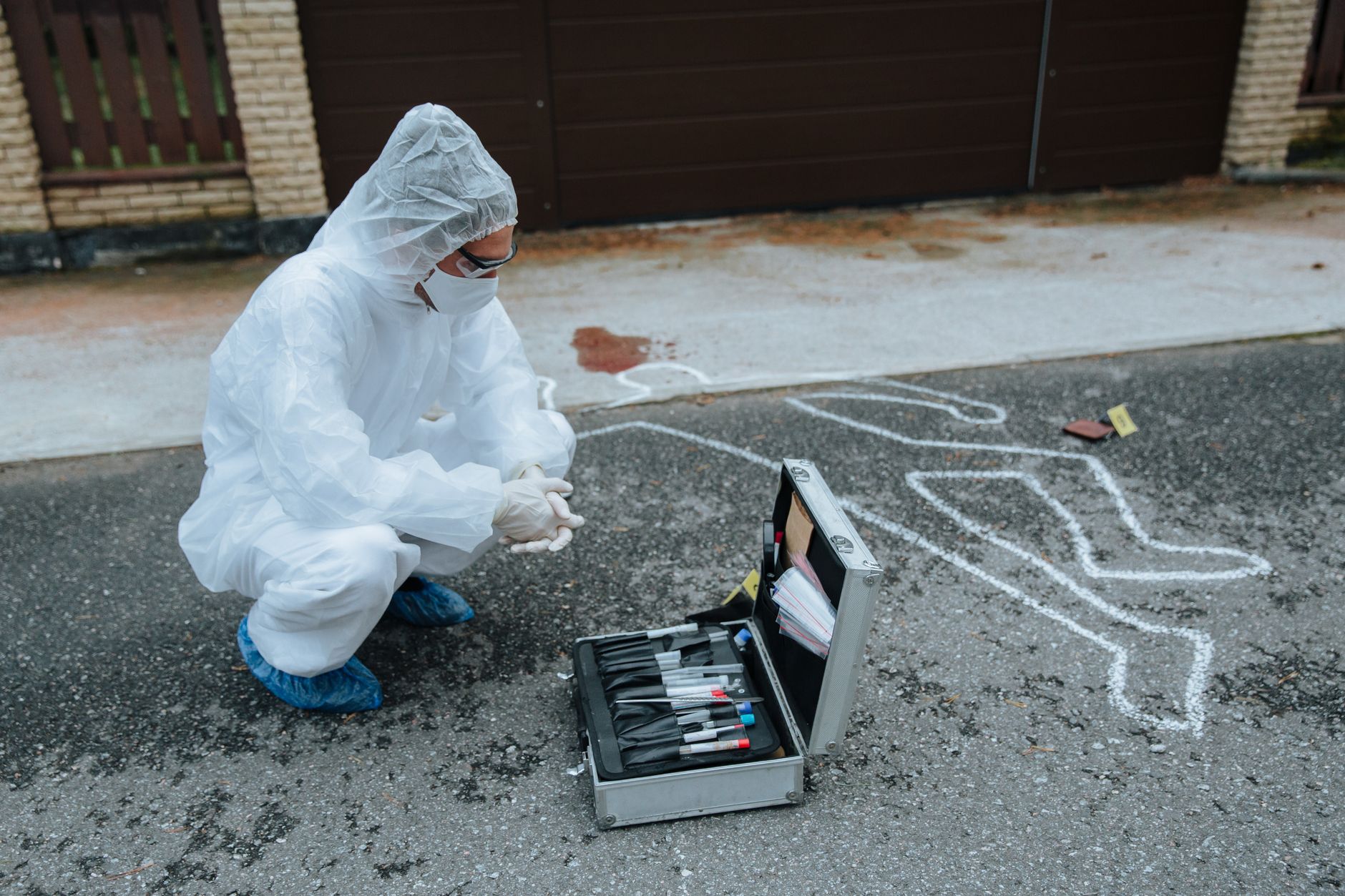
For PCB students, the traditional career conversation often revolves around medicine, dentistry, pharmacy, or biotechnology. But Biology can lead to many other scientific careers, and forensic science is one of the fields worth exploring.
Forensic science combines Biology, Chemistry, laboratory techniques, analytical thinking, and investigation. It can involve examining biological evidence, analysing substances, interpreting DNA-related evidence, studying toxicological samples, and supporting criminal investigations through scientific methods.
For a Class 11 or 12 PCB student, the important question is not simply, “Can I study forensic science?” It is:
What can I do after Class 12, what subjects should I strengthen, which courses are available, and which entrance routes can I consider?
This guide explains the major applications of forensic biology, the career landscape in India, and the academic pathways a PCB student can explore.
What Is Forensic Science?
Forensic science is the application of scientific knowledge and laboratory methods to questions related to investigations and the justice system.
It brings together several scientific disciplines, including:
- Biology
- Chemistry
- Biochemistry
- Genetics
- Toxicology
- Physics
- Digital forensics
- Psychology
- Material analysis
This means forensic science is not limited to the dramatic crime-scene investigations shown in television series.
Much of the actual work involves careful sample handling, laboratory analysis, documentation, interpretation, quality control, and scientific reporting.
For PCB students, the biological side of forensic science can be particularly interesting because it connects familiar Class 11 and 12 concepts with laboratory applications.
Why Forensic Science Can Be a Good Option for PCB Students
PCB develops several foundations that are useful in forensic science:
- Cell biology
- Genetics
- Human physiology
- Microbiology concepts
- Chemistry
- Organic and analytical chemistry
- Scientific observation
- Laboratory skills
However, students should not assume that choosing PCB automatically leads to a forensic career.
The field requires additional specialised education after school, and different courses can have different eligibility requirements.
For example, the National Forensic Sciences University (NFSU) currently offers programmes including B.Sc.–M.Sc. Forensic Science, while its School of Forensic Science also lists postgraduate programmes such as M.Sc. Forensic Science and M.Sc. Forensic Biotechnology.
The exact eligibility and admission route must always be checked for the specific programme and academic year.
1. Forensic Biology: Where Biology Meets Investigation
Forensic biology is one of the areas most naturally connected to a PCB background.
It involves the scientific examination of biological evidence that may be relevant to an investigation.
Depending on the role and laboratory, biological evidence can include:
- Blood
- Saliva
- Hair
- Tissue
- Biological fluids
- Cells
- Other biological traces
The objective is not simply to “find DNA.” A forensic laboratory follows controlled procedures to examine, preserve, analyse, and interpret evidence.
DNA and Genetic Analysis
One of the best-known applications of forensic biology is DNA analysis.
DNA-based methods can help scientists examine biological samples and establish whether samples may be associated with particular individuals.
This connects directly with concepts that PCB students encounter in Biology, including:
- DNA structure
- DNA replication
- Genes
- Chromosomes
- Genetic variation
- Molecular biology
But university-level forensic work goes considerably deeper than school-level textbook knowledge.
Students interested in this area should eventually develop skills in molecular biology, genetics, laboratory techniques, data interpretation, and scientific documentation.
Serology and Biological Evidence
Forensic biology can also involve the examination of biological fluids and other biological traces.
This may require knowledge of:
- Biology
- Biochemistry
- Immunology
- Laboratory methods
- Microscopy
- Evidence handling
The important skill is not just identifying a sample. A forensic scientist must work systematically and document findings carefully.
Why Laboratory Skills Matter
A strong forensic science student needs more than theoretical knowledge.
Laboratory work develops:
- Observation
- Accuracy
- Measurement
- Experimental discipline
- Documentation
- Analytical thinking
- Error identification
These skills are also useful in regular science education. Khandelwal Classes’ guide on developing observation skills through science laboratory work explains how careful observation, controlled variables, anomaly recording, and connecting observations with theory can strengthen scientific thinking.
For a student considering forensic science, these habits are especially valuable because forensic work depends heavily on precision.
Other Areas Within Forensic Science
Forensic biology is only one branch of a much broader field.
Depending on their interests and academic background, students can eventually explore areas such as:
Forensic Chemistry
This can involve the analysis of substances, chemicals, drugs, and other materials relevant to investigations.
Students who enjoy Chemistry alongside Biology may find this area particularly interesting.
Forensic Toxicology
Toxicology deals with the scientific examination of substances that may have biological effects.
It can involve areas such as:
- Drugs
- Poisons
- Alcohol
- Toxic substances
This pathway can require strong foundations in Chemistry, Biochemistry, Pharmacology, and laboratory analysis.
Forensic Biotechnology
This is particularly relevant to students interested in the intersection of genetics, molecular biology, and forensic applications.
NFSU’s current programme listings include M.Sc. Forensic Biotechnology, showing that specialised postgraduate pathways exist within the field.
Forensic Psychology
This combines psychology with forensic and investigative contexts.
It is different from forensic biology and may require a substantially different academic pathway.
Digital Forensics
Digital forensics focuses on evidence from computers, mobile devices, networks, and other digital systems.
A PCB student can potentially enter interdisciplinary technology-related areas later, but students specifically interested in digital forensics should investigate the required undergraduate background carefully.
2. What Is the Industry Demand for Forensic Science in India?
It is tempting to describe forensic science as a guaranteed “high-demand” career. That would be misleading.
The Indian forensic ecosystem includes government laboratories, law-enforcement-related institutions, research organisations, private laboratories, academic institutions, and specialised forensic service areas.
However, the number of positions, eligibility requirements, recruitment processes, and career progression can vary considerably.
Students should therefore think about forensic science as a specialised career field, not as a guaranteed job immediately after graduation.
Where Can Forensic Science Graduates Work?
Depending on qualifications and specialisation, career environments may include:
- Forensic science laboratories
- Government forensic departments
- Research laboratories
- Academic institutions
- Private forensic laboratories
- Toxicology-related laboratories
- Biotechnology laboratories
- DNA analysis facilities
- Pharmaceutical and analytical laboratories
- Cyber and digital forensic organisations
Some roles may require postgraduate qualifications, specialised training, examinations, or recruitment through specific organisations.
Government and Institutional Opportunities
India has been investing in forensic science infrastructure and education, and NFSU operates as an institution of national importance under the Ministry of Home Affairs.
Its current academic offerings demonstrate how broad the field has become. For 2026–27, NFSU lists programmes across areas including forensic science, forensic biotechnology, multimedia forensics, forensic nanotechnology, and related disciplines.
That does not mean every student will enter a government forensic laboratory after graduation.
It does mean that students now have more specialised academic pathways to investigate than the traditional “general B.Sc. and then job” route.
Skills That Can Improve Your Forensic Science Career
Academic qualifications are important, but forensic science also requires strong working habits.
1. Observation
Small details can matter.
Develop the habit of recording what you actually observe rather than what you expect to observe.
2. Laboratory Accuracy
Learn to work carefully with:
- Measurements
- Instruments
- Samples
- Procedures
- Documentation
3. Biology and Chemistry Foundations
Do not treat Biology as the only important PCB subject.
Chemistry becomes especially relevant in areas such as toxicology and forensic chemical analysis.
4. Data Interpretation
Modern scientific careers increasingly involve interpreting laboratory results and scientific data.
5. Scientific Communication
A forensic professional needs to communicate findings clearly.
Being able to explain a scientific observation in a structured manner is a valuable skill.
3. Course Pathways After Class 12
There is no single course that every PCB student must follow.
Your pathway depends on the area of forensic science you want to enter.
A simplified roadmap looks like this:
Class 11–12 PCB
↓
Undergraduate degree
↓
Specialisation through coursework / postgraduate study
↓
Laboratory experience / research / internships
↓
Forensic science career or further academic study
Pathway 1: Integrated Forensic Science Degree
One option is a dedicated undergraduate forensic science programme.
For example, NFSU lists a B.Sc.–M.Sc. Forensic Science five-year integrated programme among its programmes.
This type of route allows students to enter forensic science directly after school and continue into advanced study within an integrated programme.
Pathway 2: B.Sc. in a Related Life Science
Another approach is to complete an undergraduate degree in a relevant field such as:
- Biotechnology
- Microbiology
- Biochemistry
- Zoology
- Botany
- Life Sciences
and then specialise through a postgraduate forensic science programme where eligibility permits.
This route can be useful for students who are interested in both general life sciences and forensic applications.
However, eligibility varies by university and programme, so students should not assume that every B.Sc. degree qualifies them for every M.Sc. forensic programme.
Pathway 3: Specialise in Forensic Biotechnology
Students strongly interested in DNA, genetics and molecular biology can explore forensic biotechnology.
This can provide a more specialised route toward biological and molecular forensic applications.
Which Entrance Exams Should PCB Students Know About?
Entrance requirements vary significantly by institution and course.
One of the most important examples is NFSU, which publishes programme-specific admission requirements and national-level admission-test routes.
For the 2026–27 academic year, NFSU’s official admission information states that different programmes may use national-level examinations such as CUET, JEE, CLAT, CAT, GATE and other applicable tests, depending on the programme.
Therefore, students should never assume that “forensic science has one common entrance exam.”
CUET
The Common University Entrance Test (CUET-UG) is conducted by the National Testing Agency for undergraduate admissions to participating universities.
Whether CUET is applicable to a particular forensic science programme depends on the institution and course.
University-Specific Admission
Some institutions may use their own admission process, merit-based selection, or a specific national-level examination.
NFSU’s official admission portal provides programme-specific notifications and updates, including information for the 2026–27 cycle.
The Important Rule
Before applying, check all four:
- Course eligibility
- Required Class 12 subjects
- Accepted entrance examination
- Admission process for the current academic year
Do not rely on an old coaching video or a previous year’s admission post for these details.
How PCB Students Can Prepare From Class 11
You do not need to start specialised forensic preparation in Class 11.
Instead, strengthen the subjects and skills that will support your future degree.
Biology
Pay particular attention to:
- Cell biology
- Genetics
- Molecular biology
- Human biology
- Biotechnology
- Microbiology-related concepts
Chemistry
Build strong foundations in:
- Organic Chemistry
- Inorganic Chemistry
- Physical Chemistry
- Chemical reactions
- Laboratory principles
Practical Skills
Take school laboratory work seriously.
Learn how to:
- Observe carefully
- Record readings
- Follow procedures
- Handle equipment responsibly
- Identify possible experimental errors
- Explain results scientifically
Research Awareness
Start reading about forensic applications from reliable academic and institutional sources.
The objective is not to become a forensic expert before college.
It is to understand whether you genuinely enjoy the type of scientific work involved.
Is Forensic Science a Good Alternative to NEET?
This is an important question for many PCB students.
The answer depends on your interests.
If your primary goal is clinical medicine and patient care, forensic science is a completely different career direction.
Forensic science may suit students who enjoy:
- Laboratory work
- Biology and Chemistry
- Investigation
- Evidence analysis
- Research
- Scientific problem-solving
- Detailed observation
Do not choose it simply because you did not get the medical college you wanted.
Choose it because the work itself interests you.
That distinction can save students from spending years in a course that does not match their interests.
Forensic Science vs Medicine
| Factor | Medicine | Forensic Science |
|---|---|---|
| Main focus | Patient care | Scientific evidence and analysis |
| PCB relevance | Very high | High |
| Laboratory work | Important | Often central |
| Patient interaction | High | Usually limited |
| Investigation | Limited | Important in many roles |
| Research | Possible | Important pathway |
| Course pathway | Medical degree route | Multiple science/forensic routes |
| Specialisation | Medical specialties | Forensic sub-disciplines |
Neither path is automatically better.
The better choice is the one that matches the student’s interests, strengths and long-term career goals.
Common Mistakes PCB Students Should Avoid
Choosing the Field Because It Looks Interesting on Television
Real forensic work involves documentation, laboratory protocols, analysis and patience.
Assuming a B.Sc. Guarantees a Government Job
Employment depends on qualifications, vacancies, recruitment rules and competition.
Ignoring Chemistry
Forensic science is interdisciplinary. Chemistry can be essential in several specialisations.
Assuming NEET Is the Entrance Exam for Every PCB Career
NEET is important for medical admissions, but many non-medical science degrees have different admission routes.
Choosing a Course Without Checking Eligibility
Always read the current university admission notification before applying.
Focusing Only on the Degree Name
A course called “Forensic Science” can have a different curriculum, laboratory exposure and progression pathway from another institution.
Look at:
- Curriculum
- Laboratory facilities
- Faculty
- Specialisations
- Internship opportunities
- Higher-study options
- Admission requirements
Frequently Asked Questions
Can PCB students pursue forensic science after Class 12?
Yes. PCB students can explore undergraduate forensic science and related life-science pathways, subject to the eligibility requirements of the institution and programme.
Is NEET required for forensic science?
Not necessarily. Forensic science is not the same as medical education, so admission requirements depend on the university and specific programme. Some programmes may use CUET or another applicable admission route, while others can have institution-specific processes.
Is forensic science a good career for Biology students?
It can be a good option for students interested in laboratory science, biological evidence, investigation, genetics, research and analytical work. It should be chosen based on genuine interest rather than simply as an alternative to medicine.
What is forensic biology?
Forensic biology applies biological science to the examination of evidence relevant to investigations. It can involve areas such as DNA analysis, biological-fluid examination and other biological evidence.
Which subjects are important for forensic science?
Biology and Chemistry are particularly useful for PCB students. Genetics, molecular biology, biochemistry and laboratory skills can become increasingly important depending on the chosen specialisation.
What courses can I pursue after Class 12 for forensic science?
Options can include dedicated undergraduate forensic science programmes, integrated B.Sc.–M.Sc. programmes, and related life-science degrees followed by specialised postgraduate study. NFSU, for example, currently lists a B.Sc.–M.Sc. Forensic Science programme along with postgraduate forensic specialisations.
Is forensic science only about crime-scene investigation?
No. The field includes laboratory analysis, forensic biology, forensic chemistry, toxicology, biotechnology, digital forensics, psychology and other specialised areas.
Does forensic science have opportunities in India?
Yes, the field includes academic, research, laboratory, government and private-sector pathways. However, employment depends on specialisation, qualification, recruitment requirements and available positions. Students should research specific roles rather than assuming a degree guarantees a particular job.
Can I study forensic biotechnology after PCB?
Potentially, depending on the programme’s eligibility requirements. NFSU currently lists M.Sc. Forensic Biotechnology as a specialised postgraduate programme, but students must check the qualifying-degree requirements before planning this route.
Conclusion
Forensic science offers PCB students a career direction that combines Biology, Chemistry, laboratory science and investigation.
For students interested in forensic biology, topics such as genetics, molecular biology and biological evidence can provide a strong foundation. Those who enjoy Chemistry may explore toxicology and forensic chemical sciences, while students with different interests can eventually move toward biotechnology, psychology or digital forensics.
The most important step in Class 11 and 12 is not trying to specialise too early.
Build strong Biology and Chemistry fundamentals. Take practical work seriously. Develop observation and analytical skills. Explore undergraduate programmes carefully. And when you are ready to apply, verify the current eligibility criteria and entrance examination requirements directly from the university or official admission authority.
Forensic science is not simply an alternative label for a PCB student who does not choose medicine. It is a specialised scientific field with its own academic pathways and professional demands.
If the combination of science, laboratory work, evidence analysis and investigation genuinely interests you, it is a career option worth researching seriously.
Internal Links Used
- Emerging Career Opportunities in Science (2026 & Beyond) — broader career exploration for Science students.
- How to Develop Strong Observation Skills Through Science Lab Work — relevant to laboratory observation and scientific thinking.
- Courses & Programs — relevant to Khandelwal Classes’ PCB, PCMB and Science programmes.
External Links Used
- National Forensic Sciences University — Admission Portal — current NFSU admission notices and programme updates.
- NFSU — Admission Advertisement 2026–27 — current programme and admission information.
- National Testing Agency — CUET (UG) — official information about CUET-UG.
- NTA — CUET (UG) 2026 Advisory — official CUET-UG 2026 information.
Leave a Reply