

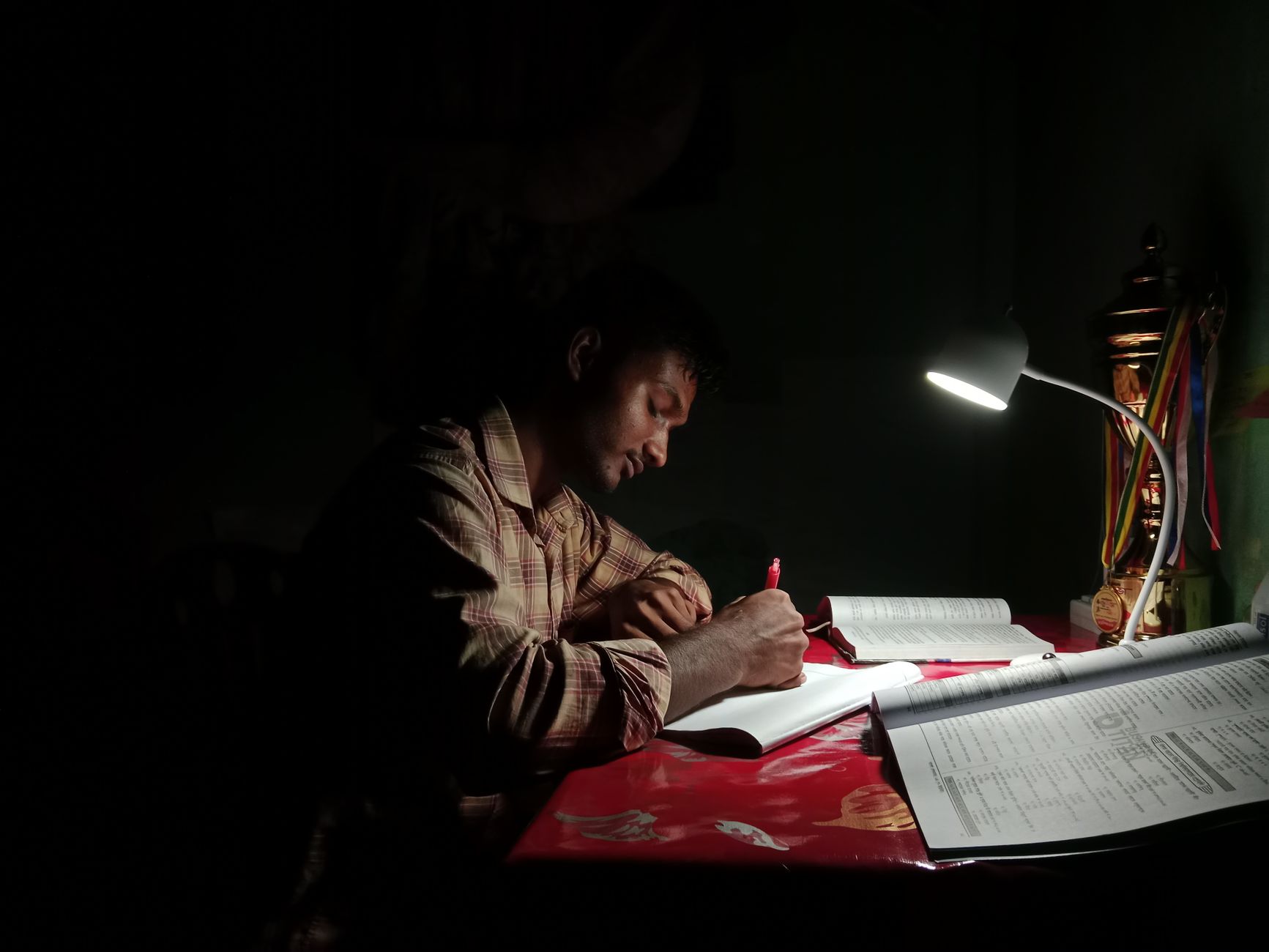
The night before an exam can create a strange kind of pressure. You know you have prepared, but suddenly every unfinished chapter feels important. You start wondering whether you should revise one more topic, solve another paper, or stay awake for a few extra hours.
For JEE, NEET and MHT-CET aspirants, this can become a serious trap. The night before an exam is usually not the right time to rebuild your preparation. It is a time to consolidate what you already know, reduce avoidable mistakes and prepare yourself to perform the next day.
A productive pre-exam night does not have to mean studying until midnight.
Instead, it should answer three questions:
- What should I revise tonight?
- What should I stop studying tonight?
- How should I prepare for the morning?
This guide explains how to use the final evening effectively through light revision, sleep, practical preparation and a simple morning sequence.
The Goal of the Night Before an Exam
Your objective on the final night is different from your objective during normal preparation.
During regular preparation, you may:
- Learn new concepts
- Complete chapters
- Solve difficult problems
- Make detailed notes
- Work on weak topics
The night before the exam, your priorities should shift towards:
Recall → Consolidation → Confidence → Rest → Readiness
This does not mean you should completely avoid studying.
It means your study should become lighter and more selective.
Trying to learn a completely new chapter at the last minute often creates more anxiety than useful preparation.
Light Revision vs New Content
One of the most important decisions on the final night is deciding whether to revise familiar material or study something new.
In most cases, light revision should take priority.
What Counts as Light Revision?
Light revision can include:
- Formula sheets
- Short notes
- Flashcards
- Important definitions
- Key diagrams
- Reaction summaries
- Frequently confused concepts
- Previously identified mistakes
- Important exceptions
- Short question sets
The material should already be familiar.
You are refreshing your memory rather than building it from scratch.
What About a Topic You Never Studied?
This requires judgement.
If a topic is completely unfamiliar and would require several hours to understand properly, trying to master it on the final night is usually a poor use of your limited time.
However, if a topic is partially familiar and you only need a quick review of its core ideas, a short revision session may be reasonable.
Use a simple test:
Can I understand and recall the essential idea in a short session?
If yes, review it.
If no, do not let one unfinished topic consume your entire evening.
The 60–30–10 Revision Rule
A simple way to structure your final revision is to divide your available study time.
60% — High-Confidence Revision
Review concepts you already know but want to keep fresh.
Focus on:
- Formulae
- Core concepts
- Definitions
- Important diagrams
- Key reactions
- Standard problem approaches
30% — Weak but Familiar Areas
Review topics where you frequently make mistakes.
Do not attempt a complete chapter reread.
Target the exact areas causing problems.
10% — Optional New or Forgotten Content
If you still have time and energy, look at a small number of potentially useful topics.
But keep this portion limited.
The percentages are a planning framework, not a strict scientific formula. The principle is to prevent last-minute new content from taking over the entire evening.
Why Cramming Feels Productive
Cramming can create a misleading feeling of progress.
You may read dozens of pages and feel:
“I studied a lot tonight.”
But reading quickly does not guarantee that you will retrieve the information accurately during the exam.
There is another problem.
As the night progresses, tiredness can affect attention and concentration. You may continue reading while retaining progressively less.
That is why the final night should focus on high-value recall rather than maximum study hours.
Sleep Is Part of Preparation
Sleep is not simply time taken away from studying.
It is part of the preparation process.
Learning involves encoding information, and sleep contributes to the consolidation of memories and learning. A night spent sacrificing substantial sleep for last-minute reading can therefore work against the goal of performing well the next day.
For a student preparing for a major examination, this matters because the exam requires more than factual knowledge.
You also need:
- Attention
- Working memory
- Decision-making
- Reading accuracy
- Mental stamina
- Emotional control
The exact amount of sleep needed varies between individuals, but the practical lesson is straightforward:
Do not treat sleep as wasted study time.
The “One More Chapter” Trap
It usually starts innocently.
“I will sleep after one more chapter.”
Then another topic appears.
Then another.
Soon, the student is sacrificing sleep for material they may not even remember properly the next morning.
Set a stopping point before you begin the evening.
Once your planned revision is complete, close the books.
That stopping point is part of your exam strategy.
A Practical Night-Before Schedule
Your schedule should depend on your normal routine, exam timing and personal sleep requirements.
A sample structure could look like this:
| Time Block | Activity |
|---|---|
| Early evening | Dinner and short break |
| Next 60–90 min | Formulae, concepts and key notes |
| Short break | Walk, hydrate, reset |
| Next 45–60 min | Weak-but-familiar topics |
| Next 20–30 min | Flashcards or error log |
| Final 15–20 min | Pack materials and check logistics |
| Before sleep | Stop academic work and wind down |
The exact clock times are less important than having a clear stopping point.
Use the Error Log One Last Time
If you have maintained an error log during preparation, the night before the exam is an excellent time to review it.
But do not attempt to solve every mistake again.
Look for patterns.
For example:
- Formula substitution errors
- Sign mistakes
- Unit conversion mistakes
- Misreading questions
- Confusing two biological terms
- Mixing up Chemistry reactions
- Forgetting conditions
- Spending too much time on difficult questions
A short review of recurring mistakes can be more useful than randomly opening another chapter.
Don’t Take a Full-Length Mock at Midnight
A full mock test has value during preparation.
The night before an exam is different.
A full-length test can:
- Consume substantial time
- Increase anxiety
- Create unnecessary score fluctuations
- Delay sleep
- Leave you analysing mistakes when you should be winding down
If you want to practise, use a short, controlled question set instead.
The purpose should be maintaining rhythm, not discovering your entire level of preparation at 11 p.m.
Prepare Everything Before You Sleep
One of the simplest ways to reduce morning stress is to remove decisions from the morning.
Prepare what you need in advance.
Depending on the examination instructions, check:
- Required documents
- Identification
- Examination-related materials
- Clothing
- Travel route
- Reporting requirements
- Water or permitted essentials
- Alarm
- Backup alarm if needed
For an official examination, always follow the latest instructions issued by the relevant examination authority rather than relying on old checklists.
The principle is simple:
Anything that can be prepared tonight should not become tomorrow morning’s problem.
The Morning-of Preparation Sequence
The morning should not become another intensive study session.
Use a predictable sequence.
Step 1: Wake Up With Enough Time
Avoid waking up at the last possible moment.
Give yourself enough time to get ready without rushing.
Step 2: Hydrate and Have Your Normal Breakfast
Do not experiment with unfamiliar foods or excessive caffeine.
Keep your morning routine predictable.
Step 3: Do a Short Recall Session
If you normally revise in the morning, keep it light.
Review:
- Formula sheet
- Flashcards
- Important reactions
- Diagrams
- Short error list
Do not start an entirely new chapter.
Step 4: Stop Studying
At some point, close your notes.
Walking into the exam centre while frantically reading the textbook can increase mental clutter.
You want your attention available for the paper.
Step 5: Reach With Adequate Time
Allow enough travel time for normal delays.
The goal is to arrive prepared rather than sprinting into the examination environment.
What JEE Students Can Revise
For JEE, the final revision should focus on material that benefits from quick recall.
Physics
- Important formulae
- Units and dimensions
- Common conceptual mistakes
- Standard approaches
- Frequently confused conditions
Chemistry
- Important reactions
- Inorganic facts and trends
- Formulae
- Exceptions
- Common calculation approaches
Mathematics
- Formulae
- Standard identities
- Common question patterns
- Conditions and restrictions
- Frequently repeated mistakes
Do not attempt to learn an entire unfamiliar chapter overnight.
What NEET Students Can Revise
For NEET, short factual and conceptual revision can be particularly useful.
Biology
- Important diagrams
- Definitions
- Processes
- Tables
- Classifications
- Frequently confused terms
- Previously marked NCERT-based facts
Chemistry
- Formulae
- Reactions
- Important trends
- Exceptions
- Calculation relationships
Physics
- Formulae
- Units
- Common concepts
- Frequently made calculation mistakes
The final night should reinforce your existing preparation rather than replace it.
What MHT-CET Students Can Revise
MHT-CET aspirants should similarly prioritise quick recall and exam readiness.
Review:
- Formula sheets
- Important Chemistry reactions
- Biology facts and diagrams where applicable
- Frequently missed concepts
- Previous MCQ mistakes
- Short notes
If your preparation includes multiple subjects, avoid spending the entire evening on one subject simply because it feels comfortable.
Keep the revision balanced according to your needs.
The Final-Night Decision Filter
Whenever you are tempted to open another chapter, ask three questions:
Question 1: Is this important?
If not, skip it.
Question 2: Have I studied it before?
If yes, a short review may be useful.
If no, consider whether learning it now is genuinely worth the time.
Question 3: Will studying it reduce my sleep or preparation for tomorrow?
If yes, reconsider.
This three-question filter can prevent many last-minute decisions.
What to Avoid the Night Before
Avoid All-Nighters
More hours awake do not automatically mean more effective learning.
Avoid Completely New Study Materials
Do not suddenly switch to a new book, teacher, course or question bank.
Use resources you already trust.
Avoid Comparing Preparation
Checking how many chapters your friends completed can increase anxiety without improving your preparation.
Avoid Excessive Mock Testing
One last score is not going to rewrite months of preparation.
Avoid Major Routine Changes
Keep food, caffeine, sleep and study habits as normal as possible.
Avoid Panic-Based Studying
If you notice yourself repeatedly jumping between chapters, stop.
Take a short break and return to your planned revision list.
A 30-Minute Emergency Revision Plan
If you have very little time left, keep it extremely simple.
First 10 Minutes
Review your most important formulae and concepts.
Next 10 Minutes
Review your error log and the mistakes you make repeatedly.
Final 10 Minutes
Check your exam materials and tomorrow’s logistics.
Then stop.
Do not turn 30 minutes of planned revision into three hours of panic.
Frequently Asked Questions
Should I study the night before an exam?
Yes, but keep the revision light and targeted. Focus on familiar material, important concepts, formulae, mistakes and other high-value revision points rather than attempting to learn everything again.
Is it better to revise or study new topics the night before?
For most students, revision of previously studied material should take priority. A completely new and difficult topic can consume time without providing reliable mastery.
Does sleep help with exam preparation?
Sleep is an important part of learning and cognitive functioning. It supports memory consolidation and helps you approach the exam with better attention and mental readiness.
Should I solve a mock test the night before an exam?
A full-length mock is usually unnecessary immediately before the exam. If you want practice, a short, controlled question set can help maintain familiarity without consuming the entire evening.
What should I revise before JEE, NEET or MHT-CET?
Prioritise formulae, key concepts, reactions, diagrams, definitions, frequently confused information and mistakes from your previous practice. Focus on material you have already studied.
How late should I study before an exam?
There is no universal clock time that suits everyone. Set a stopping point that allows you to maintain your normal, adequate sleep routine and still have enough time to prepare for the morning.
Should I revise in the morning before the exam?
A short recall session can be useful if it is part of your normal routine. Avoid heavy studying or starting unfamiliar chapters immediately before the examination.
What should I do if I feel unprepared the night before?
Do not attempt to fix the entire syllabus overnight. Identify the highest-priority familiar topics, review them briefly, prepare your exam materials and protect your sleep.
Final Night Checklist
Before going to sleep, ask yourself:
- Have I reviewed my most important concepts?
- Have I checked my common mistakes?
- Have I avoided unnecessary new material?
- Have I prepared everything required for the exam?
- Have I checked my travel plan?
- Have I set my alarm?
- Have I stopped studying at a reasonable time?
- Am I giving myself enough opportunity to sleep?
If most answers are yes, there is little value in creating another last-minute task.
Conclusion
The night before an exam is not the final battle for the syllabus.
It is the transition between preparation and performance.
Use the evening to refresh important knowledge, review recurring mistakes, prepare your logistics and protect your sleep.
For JEE, NEET and MHT-CET aspirants, a calm final evening can be more useful than a frantic attempt to learn everything that was left unfinished.
Remember the basic sequence:
Light revision → Error review → Prepare → Sleep → Short morning recall → Exam
You do not need to know one more chapter at midnight to prove that you prepared.
You need to arrive the next morning with the knowledge you already built, your essentials ready and your mind prepared to use them.
Leave a Reply