

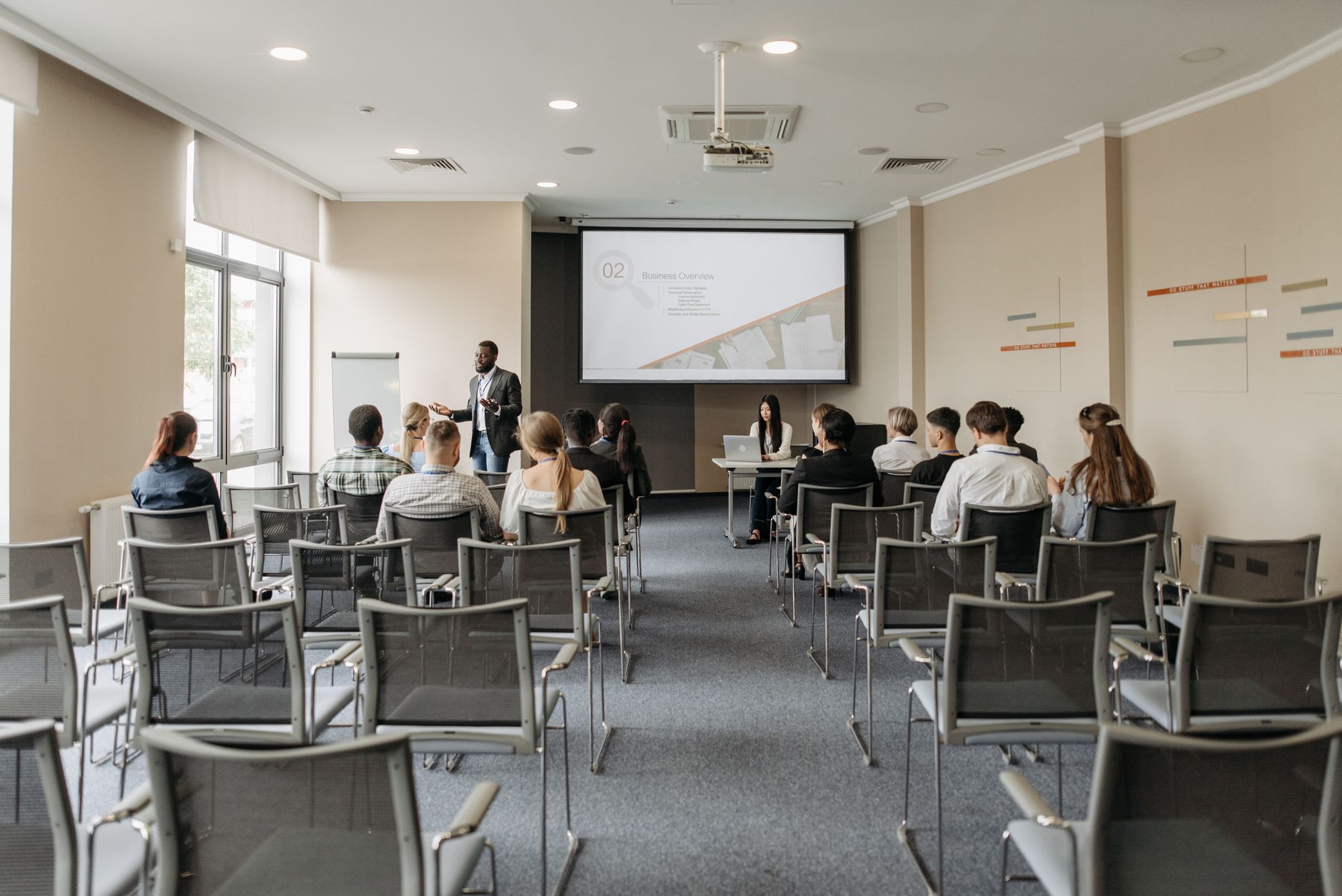
A viva exam can test something that written examinations often do not: your ability to explain what you know out loud, clearly and confidently.
You may understand a Physics concept, remember a Chemistry reaction or know a Biology process perfectly, yet struggle when a teacher suddenly asks, “Explain this.” The problem is not always a lack of knowledge. Sometimes it is difficulty organising your thoughts, handling an unexpected question or staying calm when you feel everyone is listening.
For Science students, these situations can appear during practical examinations, laboratory vivas, project presentations, internal assessments and other academic discussions. Developing public speaking skills for viva exams therefore is not about becoming a professional speaker. It is about learning how to communicate your knowledge under pressure.
Three skills matter especially: structuring verbal answers, handling questions you do not know, and maintaining confidence when you are under pressure.
Why Public Speaking Matters in Science Viva Exams
Science is often associated with written answers, numerical problems, diagrams and experiments. However, practical learning also requires communication.
During a viva, an examiner may ask you to:
- Define a scientific term
- Explain a concept in your own words
- Describe an experimental procedure
- State the reason behind an observation
- Interpret a result
- Explain why a particular method was used
- Answer a follow-up question
A strong answer is not necessarily the longest answer.
In fact, giving an unnecessarily long response can create additional opportunities for confusion. A better approach is to answer the exact question first and then provide supporting details if required.
Think of your viva response as a small logical structure:
Answer → Explanation → Example or reason
This simple framework can make verbal answers more organised.
1. Structure Your Verbal Answers
The first major skill is learning how to turn what you know into a clear spoken answer.
Start With the Direct Answer
Do not spend 30 seconds trying to build up to your answer.
If the examiner asks, “What is diffusion?” begin with the definition.
Then explain it if necessary.
For example:
Question: What is diffusion?
Better response structure:
“Diffusion is the movement of particles from a region of higher concentration to a region of lower concentration due to their random motion.”
If the examiner asks for an example, you can then provide one.
The important point is that the definition comes first.
Use the 3-Part Answer Framework
For many Science viva questions, use:
1. Definition or direct answer
2. Key explanation
3. Example, application or reason
For example, if asked why increasing temperature affects enzyme activity:
Direct answer: Enzyme activity changes with temperature.
Explanation: Increasing temperature can increase molecular movement and reaction rate up to an optimum range, but excessive temperature can disrupt enzyme structure.
Example: Many enzymes lose activity at temperatures significantly above their optimum because of structural changes.
You do not need to memorise a script. You need to understand the logical order.
For “Why” Questions, Explain Cause and Effect
Questions beginning with “Why” require a relationship.
Use:
Cause → Process → Result
For example:
“Why does resistance change with temperature?”
Rather than giving disconnected facts, explain the relationship between the relevant physical factors and the resulting change.
This approach works across Science subjects.
For Comparison Questions, Use a Fixed Order
If asked to distinguish between two concepts, avoid jumping randomly between points.
Use:
Definition → Feature 1 → Feature 2 → Example
For instance, when comparing DNA and RNA, you can move systematically through:
- Sugar
- Nitrogenous bases
- Typical structure
- Biological role
A structured comparison sounds more confident because the examiner can follow your reasoning.
2. Pause Before You Answer
A short pause is not a sign that you do not know the answer.
When a question is asked, take a moment to understand exactly what is being asked.
A useful internal sequence is:
Listen → Identify → Organise → Answer
Instead of immediately speaking while still thinking, allow yourself a brief pause.
For example:
“Could you explain the role of the catalyst?”
Pause.
Then:
“A catalyst increases the rate of a reaction by providing an alternative pathway with lower activation energy, without being consumed overall.”
That is much clearer than beginning with:
“Actually, I think… maybe… because…”
Avoid Filler Words
Common filler words include:
- Umm
- Actually
- Like
- Basically
- Maybe
- I think
- You know
Occasional hesitation is completely normal. The goal is not to eliminate every filler word. The goal is to avoid using them so frequently that they replace your answer.
A quiet pause is often better than several filler words.
3. What to Do When You Do Not Know the Answer
This is one of the most important viva skills.
You will not know every question.
Trying to bluff your way through a scientific question can make the situation worse, especially if the examiner asks a follow-up question.
Instead, distinguish between three situations.
Situation 1: You Know the Answer
Answer directly.
Situation 2: You Partially Know the Answer
State what you know and be precise about the part you are uncertain about.
For example:
“I remember that the process involves X and Y, but I am not completely sure about the final step.”
This is better than inventing a confident-sounding explanation.
Situation 3: You Do Not Know the Answer
Be honest.
You can say:
“I am not sure about that.”
or:
“I don’t remember the exact answer at the moment.”
Then stop.
You do not need to turn uncertainty into a long explanation.
Do Not Guess Scientific Facts Randomly
There is a difference between reasoning and guessing.
If the question gives you enough information to reason toward an answer, explain your reasoning.
If you genuinely do not know the relevant fact, do not invent one.
Scientific communication values accuracy.
4. Handle Follow-Up Questions
Sometimes the first answer leads to another question.
This is not necessarily a bad sign.
The examiner may simply be testing whether you understand the concept beyond memorisation.
If you answered:
“Photosynthesis occurs in chloroplasts.”
The examiner might ask:
“Which part of the chloroplast?”
You should then narrow the answer.
The key is to listen carefully to the new question rather than repeating your previous answer.
Use the Examiner’s Question as a Clue
If the examiner asks:
“Why?”
They want reasoning.
If they ask:
“How?”
They want a process.
If they ask:
“Where?”
They want a location.
If they ask:
“What is the difference?”
They want a comparison.
Understanding the question type helps you choose the appropriate answer structure.
5. Build Confidence Under Pressure
Confidence during a viva does not mean never feeling nervous.
It means being able to continue communicating even when you are nervous.
Your heart may beat faster. Your hands may feel uncomfortable. You may suddenly forget a word.
These reactions do not automatically mean you are unprepared.
Control Your Pace
Nervous students often speak too quickly.
Make a deliberate effort to slow down.
Instead of:
“Photosynthesisisaprocesswhereplants…”
Say:
“Photosynthesis is a process… in which green plants convert light energy into chemical energy.”
A controlled pace makes your answer easier to understand and gives you more time to think.
Use Breathing Before the Viva
Before entering the examination room, take a few slow breaths.
Try:
Inhale → brief pause → slow exhale
The objective is not to perform a complicated breathing exercise. It is simply to reduce the tendency to rush into the viva with unnecessary tension.
Maintain Natural Eye Contact
Look at the examiner while answering.
You do not need to stare continuously.
Natural eye contact communicates that you are engaged with the question.
If you need to think, it is perfectly normal to briefly look away and then return your attention to the examiner.
6. Practise Speaking, Not Just Reading
One of the biggest mistakes students make while preparing for a viva is preparing silently.
Reading an answer and speaking an answer are different skills.
After studying a topic, close your notes and explain it aloud.
For example, after studying a Physics chapter, ask yourself:
- What is the main concept?
- What is the relevant formula?
- What does each variable represent?
- When can the formula be used?
- What common mistake could occur?
Then explain the answer verbally.
For Chemistry:
- Define the concept.
- Explain the reaction.
- State the relevant condition.
- Give an example.
For Biology:
- Define the process.
- Explain the sequence.
- Identify important structures.
- State the outcome.
This turns passive knowledge into usable knowledge.
7. Use the “60-Second Explanation” Technique
Choose one concept and explain it in approximately one minute without looking at your notes.
Your explanation should contain:
What it is → How it works → Why it matters
For example:
Topic: Osmosis
“What is it?”
Movement of water through a selectively permeable membrane.
How does it work?
Water moves according to the relevant concentration gradient across the membrane.
Why does it matter?
It is important in processes such as water movement in plant cells.
After speaking, ask:
- Did I answer the question directly?
- Did I use unnecessary words?
- Did I explain the concept logically?
- Did I use the correct terminology?
- Did I sound rushed?
This is practical viva preparation.
8. Record Yourself
You do not need expensive equipment.
Use your phone’s voice recorder.
Choose five likely viva questions and answer them without reading.
Then listen to the recording.
Check:
- Speaking speed
- Filler words
- Volume
- Clarity
- Repetition
- Long pauses
- Incorrect terminology
You may notice habits that are difficult to identify while speaking.
The purpose is not to criticise yourself. It is to identify one or two specific things to improve.
9. Practise With a Partner
A friend, classmate or family member can act as the examiner.
Ask them to:
- Choose questions randomly.
- Interrupt with follow-up questions.
- Ask at least one unfamiliar question.
- Avoid helping immediately.
- Give feedback after the practice session.
Random questions are particularly useful because real viva situations do not always follow the exact order in your notes.
10. Subject-Specific Viva Strategies
Physics Viva
Focus on:
- Definitions
- Physical meaning of formulas
- Units and dimensions
- Graph interpretation
- Experimental principles
- Sources of error
- Why a particular instrument or procedure is used
Do not memorise formulas without understanding what the variables represent.
Chemistry Viva
Focus on:
- Definitions
- Reactions
- Conditions
- Observations
- Reasons behind reactions
- Chemical properties
- Experimental procedures
- Safety-related concepts where applicable
Be careful with terminology and chemical equations.
Biology Viva
Focus on:
- Definitions
- Processes
- Functions
- Structures
- Diagrams
- Differences
- Examples
- Biological significance
For Biology, precise terminology matters. Avoid replacing scientific terms with vague descriptions when the exact term is known.
11. What Not to Do in a Viva
Avoid these habits:
Giving Extremely Long Answers
Answer what was asked first.
Speaking Before Understanding the Question
Listen completely.
Bluffing
Never invent scientific information simply to avoid saying “I don’t know.”
Memorising Full Sentences
Understand the concept instead of memorising a speech.
Apologising Repeatedly
One “I’m not sure” is enough. Do not repeatedly apologise for every uncertain answer.
Panicking After One Wrong Answer
One mistake does not determine the entire viva.
Listen to the next question and start again.
12. A 7-Day Viva Preparation Plan
If your viva is one week away, you can build speaking practice into your normal revision.
| Day | Practice |
|---|---|
| Day 1 | Prepare common definitions and basic concepts |
| Day 2 | Practise “why” and “how” questions |
| Day 3 | Explain important diagrams, processes and experiments |
| Day 4 | Practise Physics, Chemistry and Biology questions randomly |
| Day 5 | Conduct a mock viva with a partner |
| Day 6 | Record yourself answering difficult questions |
| Day 7 | Light revision + confidence and speaking practice |
Keep the sessions short and focused.
The objective is to make verbal explanation familiar before the actual viva.
Frequently Asked Questions
1. How can I speak confidently during a viva exam?
Prepare concepts thoroughly, practise answering aloud and deliberately slow down your speaking pace. Confidence usually improves when the process of answering becomes familiar.
2. What should I do if I do not know a viva answer?
Be honest. If you know part of the answer, explain only what you are confident about. If you do not know it, say so rather than inventing a scientific explanation.
3. Should viva answers be long?
Not necessarily. Start with a direct answer and add explanation or an example when appropriate. A concise, accurate answer is usually better than an unnecessarily long one.
4. How do I stop saying “umm” during a viva?
Practise pausing silently before answering. Recording yourself can also help you identify when and why you use filler words.
5. How can I practise viva questions alone?
Choose questions randomly, close your notes and answer aloud. You can also record your answers and evaluate their clarity, accuracy and structure.
6. What should I do if the examiner asks a question I did not prepare?
Do not panic. Listen carefully and determine whether you can reason from concepts you already know. If you genuinely do not know the answer, acknowledge it honestly.
7. How can I improve my Physics viva performance?
Revise definitions, formulas, units, physical meanings, experimental principles, graphs and common sources of error. Practise explaining them aloud.
8. Is nervousness normal during a viva?
Yes. Feeling nervous does not automatically mean you are unprepared. Focus on controlling your pace, breathing steadily and answering one question at a time.
Conclusion
Good viva performance is not about sounding like a professional public speaker. It is about communicating scientific knowledge clearly when someone asks you a question unexpectedly.
Start by structuring answers with a direct response, explanation and example or reason. When you do not know something, be honest instead of guessing. When pressure rises, slow down, breathe and focus on the question in front of you rather than worrying about the previous answer.
Most importantly, practise speaking.
Read your concepts, close the book and explain them aloud. Record yourself. Practise with a partner. Ask yourself unexpected questions.
The goal is simple:
Know the concept. Organise the thought. Speak clearly. Stay calm.
That is the foundation of strong public speaking for Science viva exams.
Leave a Reply