

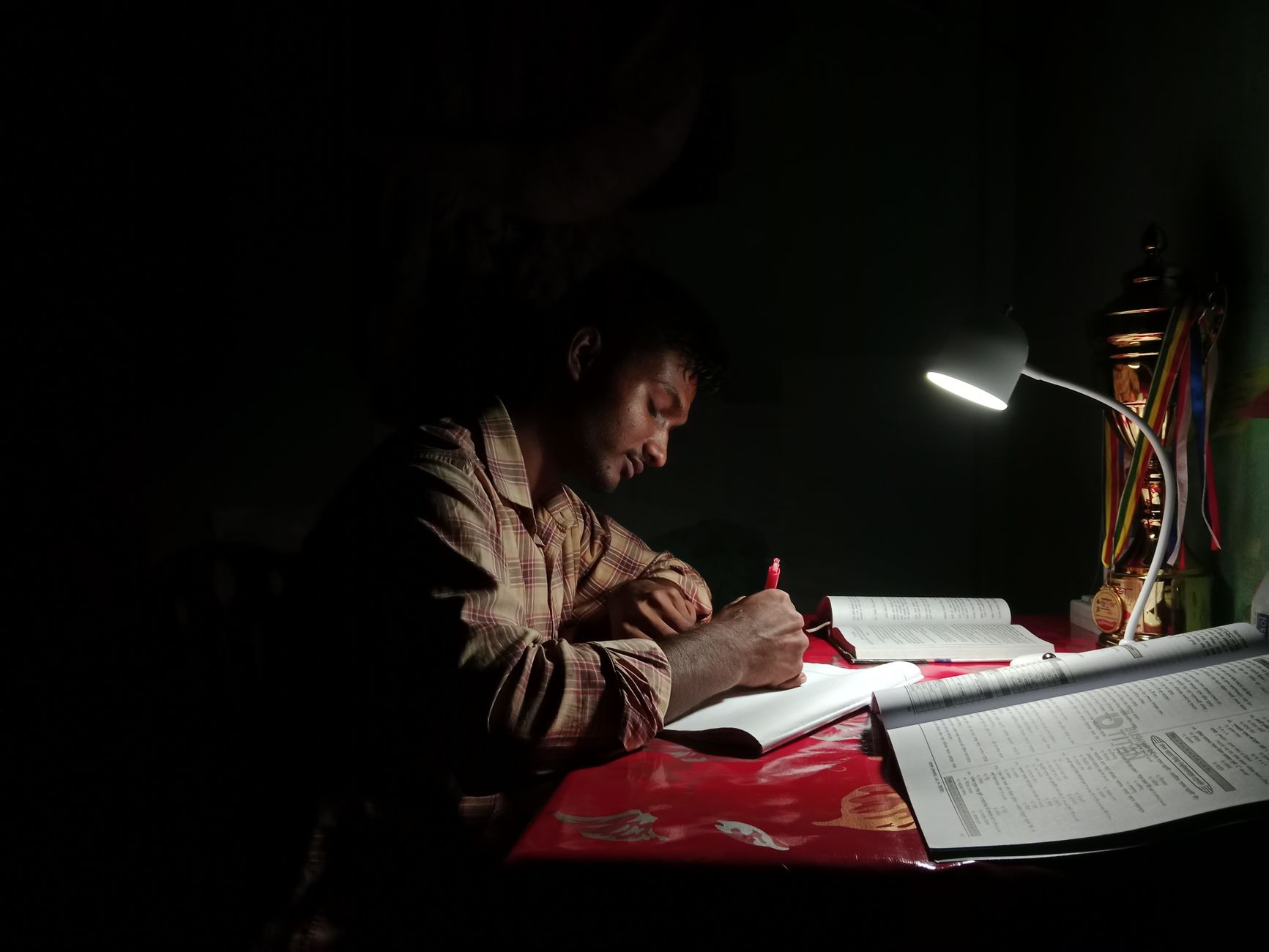
The night before an exam can feel like the last opportunity to improve your preparation. Students may be tempted to revise every chapter again, solve new questions, or stay awake until they feel completely ready. However, the final evening is better used for light revision, organised preparation, and adequate sleep.
The goal is not to learn the entire syllabus overnight. It is to consolidate what you already know, reduce avoidable stress, and prepare yourself to think clearly during the examination.
A productive exam eve should have three priorities: a focused revision checklist, a proper sleep routine, and a simple morning plan. When these are organised in advance, students can avoid unnecessary panic and begin the examination day with greater confidence.
1. Light Revision Checklist: What Should You Study the Night Before?
The night before an examination is not the right time to start an entirely new chapter or attempt to complete an unfinished syllabus. New information can create confusion, especially when students are already tired or anxious.
Instead, use the final revision session to revisit familiar concepts and identify information that you may need to recall quickly.
Revise High-Priority Concepts
Start with topics that you have already studied but need to refresh.
Depending on your examination, this may include:
- Important formulas and their applications in Physics.
- Chemical reactions, periodic trends, and key concepts in Chemistry.
- Important diagrams, definitions, and biological processes.
- Mathematical identities, standard results, and problem-solving methods.
- Frequently revised concepts from your own error notebook.
Avoid trying to cover every chapter with equal intensity. Prioritise the material that you have already prepared and can revise effectively.
Use Active Recall Instead of Repeated Reading
Active recall means trying to retrieve information from memory rather than simply reading it again.
For example:
- Read a formula or concept once.
- Close the textbook or notes.
- Try to reproduce the information from memory.
- Check your answer and correct anything you missed.
This approach helps you identify what you actually remember.
For Biology, try recalling the steps of a process without looking at the diagram. For Chemistry, reproduce important reactions from memory. For Physics and Mathematics, recall formulas and identify the conditions under which they apply.
Review Your Mistake Notebook
Your previous mistakes can be more useful than attempting another random set of questions.
Review questions that you previously answered incorrectly because of:
- A misunderstood concept.
- An incorrect formula.
- A calculation error.
- Confusion between similar terms.
- Missing an important condition in the question.
- Rushing through the options.
Focus on understanding why the mistake happened and how to avoid repeating it.
Avoid Full-Length Mock Tests Late at Night
A full mock test on the final evening can increase stress without leaving enough time to analyse the results properly.
If you want to practise, solve a small number of familiar questions or review selected mistakes. Do not use a late-night test score to judge your overall preparation.
Your Night-Before Revision Checklist
Use this checklist to keep your final revision focused:
- Review important formulas and definitions.
- Revise diagrams, reactions, and key processes.
- Recall important concepts without looking at notes.
- Review previously incorrect questions.
- Check important instructions for the examination.
- Stop studying at a planned time.
- Arrange examination documents and stationery.
- Set an alarm and prepare for sleep.
The purpose of this checklist is to create a clear stopping point. Once the important tasks are complete, avoid reopening every textbook because of last-minute anxiety.
2. Sleep Consolidation Science: Why Rest Matters Before an Exam
Many students believe that studying for one additional hour is always better than sleeping for one additional hour. This assumption can be counterproductive.
Sleep is an active biological process. During sleep, the brain cycles through different stages, including non-REM and REM sleep. These stages contribute to physical restoration, learning, and memory processes.
How Sleep Supports Memory
When you study, your brain processes new information. Sleep helps support the stabilisation and consolidation of memories formed during learning.
This is one reason why regularly studying and sleeping adequately is more useful than repeatedly sacrificing sleep to extend study sessions.
Sleep supports two important aspects of preparation:
1. Memory consolidation
Information learned during the day can be strengthened and organised during sleep. This supports the ability to retain and retrieve previously studied material.
2. Attention and concentration
Adequate sleep supports alertness and attention. These abilities matter during examinations because students must read questions, process information, perform calculations, and make decisions.
Research on sleep deprivation has found negative effects on memory and other cognitive functions. <a href=”https://pmc.ncbi.nlm.nih.gov/articles/PMC8893218/“>Research reviews on sleep deprivation and memory</a> discuss how insufficient sleep before and after learning can affect memory performance.
How Much Sleep Should Students Aim For?
Sleep requirements depend on age.
General recommendations include:
- Adolescents aged 13–18 years: 8–10 hours per 24 hours.
- Adults: At least 7 hours of sleep regularly, with individual needs varying.
Students should avoid treating these figures as a target that can be achieved by suddenly changing their entire sleep schedule on the final night.
The more useful approach is to maintain a reasonably consistent sleep routine throughout the preparation period.
The US Centers for Disease Control and Prevention provides age-based sleep recommendations for students in its Sleep and Health guidance.
Why All-Nighters Can Backfire
An all-nighter may create the impression that you have gained additional study time. However, sleep deprivation can affect attention, memory, mood, and decision-making.
During an examination, these abilities are essential.
A student who has revised one additional chapter but is struggling to concentrate may find it difficult to use their existing knowledge effectively.
Avoid these common habits:
- Staying awake throughout the night to complete unfinished chapters.
- Drinking excessive caffeine to suppress sleepiness.
- Repeatedly checking how much other students have studied.
- Attempting difficult new questions when mentally exhausted.
- Using the phone late into the night.
- Changing your usual sleep schedule drastically.
Build a Relaxing Pre-Sleep Routine
Instead of studying until the moment you close your eyes, create a short transition between revision and sleep.
You can:
- Finish your final revision at a planned time.
- Arrange your documents and stationery.
- Keep your phone away or reduce screen use.
- Avoid caffeine close to bedtime.
- Choose a quiet activity such as light reading or relaxation.
- Keep your sleeping environment comfortable and suitable for rest.
If you feel anxious, take a few slow breaths and remind yourself that the purpose of the evening is preparation, not perfection.
Do not experiment with sleeping medication or unfamiliar supplements just before an examination.
3. Morning-of-Exam Sequence: Start the Day Without Panic
A well-organised morning reduces unnecessary decisions and gives you more time to prepare for the examination calmly.
The most effective morning routine is one that is simple, familiar, and adjusted to the examination reporting time.
Step 1: Wake Up With Enough Time
Set your alarm according to your travel time and reporting requirements.
Avoid waking up at the last possible minute. Give yourself enough time to get ready, eat, check your belongings, and reach the examination centre.
If you are worried about oversleeping, set a backup alarm or ask a family member to help you wake up.
Step 2: Have a Familiar Breakfast
Eat a breakfast that you are comfortable with and that suits your normal routine.
Avoid experimenting with unfamiliar foods or skipping breakfast simply because you feel nervous.
Stay hydrated, but avoid drinking excessive amounts of water immediately before leaving.
Step 3: Perform a Short Memory Review
If you feel comfortable revising in the morning, spend a limited amount of time reviewing familiar material.
You can look at:
- A formula sheet.
- Important definitions.
- Selected diagrams.
- Key reactions.
- Short notes from previously revised topics.
Do not start a new chapter or attempt to learn a difficult topic at the last minute.
If morning revision makes you more anxious, skip it. A calm start is more useful than forcing yourself to study.
Step 4: Check Examination Essentials
Prepare your examination materials the previous night and verify them once in the morning.
Depending on the examination instructions, check:
- Admit card or hall ticket.
- Valid photo identification, if required.
- Permitted stationery.
- Any additional documents specifically mentioned in the instructions.
- Examination centre address and reporting time.
For computer-based examinations, carefully follow the official instructions regarding permitted items and prohibited materials.
Do not assume that an item is permitted simply because it was allowed in another examination.
Step 5: Leave With a Travel Buffer
Plan your journey using the reporting time and expected travel conditions.
Keep additional time for traffic, public transport delays, security checks, and locating the examination building.
Reaching the centre early is generally less stressful than rushing at the last minute.
Step 6: Stay Away From Last-Minute Comparison
Avoid discussing difficult questions, unfinished chapters, or other students’ preparation immediately before entering the examination centre.
A conversation about an unfamiliar topic can create unnecessary doubt, even when you have prepared adequately.
Instead, focus on your own preparation and follow the examination instructions.
4. A Practical Night-Before and Exam-Morning Schedule
The following is an illustrative routine. Adjust it according to your examination timing, travel requirements, age, and normal sleep schedule.
Evening Before the Examination
| Activity | Suggested duration |
|---|---|
| Revise important formulas and concepts | 30 minutes |
| Review mistakes and difficult points | 20 minutes |
| Recall key information without notes | 15 minutes |
| Check examination documents and stationery | 10 minutes |
| Relax and prepare for sleep | Remaining time |
Do not treat these durations as compulsory. If your revision is complete earlier, stop rather than filling the remaining time with unnecessary studying.
Morning of the Examination
| Activity | Suggested timing |
|---|---|
| Wake up | According to reporting time |
| Freshen up and have breakfast | After waking |
| Optional light revision | Short and familiar review |
| Check documents and essentials | Before leaving |
| Travel to the centre | With a suitable time buffer |
The purpose of the schedule is to remove uncertainty. You should not need to make major preparation decisions on the morning of the examination.
5. What to Do If You Feel Anxious the Night Before
Feeling nervous before an important examination is common. The problem begins when anxiety pushes students into unplanned studying, repeated checking, and unnecessary comparisons.
Try these practical techniques.
Separate Preparation From Worry
Write down the tasks you can still complete before the examination.
For example:
- Review one formula sheet.
- Check the admit card.
- Arrange stationery.
- Set the alarm.
Once these tasks are complete, recognise that continuing to worry will not add to your preparation.
Use Slow Breathing
When you notice that your thoughts are becoming overwhelming, pause and breathe slowly.
Try this simple exercise:
- Sit comfortably.
- Breathe in gently.
- Breathe out slowly.
- Repeat for a few cycles without forcing your breathing.
The purpose is to give yourself a moment to settle rather than trying to eliminate every nervous feeling.
Stop Comparing Preparation Levels
You cannot accurately measure your readiness by looking at another student’s revision schedule.
Some students revise quickly, while others need more time. Their preparation methods, strengths, and previous learning may be different.
Focus on what you have completed and what you can realistically review.
Avoid Making Last-Minute Decisions Based on Panic
Do not suddenly change your entire study strategy because you remember one unfamiliar topic.
A single difficult concept does not represent your complete preparation.
Use your remaining time for familiar material and allow yourself to rest.
If anxiety becomes overwhelming or repeatedly interferes with sleep and daily functioning, consider speaking with a trusted adult, teacher, or qualified mental health professional.
6. Common Mistakes to Avoid on the Night Before an Exam
A productive final evening is as much about avoiding unhelpful habits as it is about revising.
1. Starting an entirely new chapter
Learning unfamiliar material under pressure can create confusion. Prioritise topics you have already studied.
2. Solving difficult questions continuously
Repeatedly attempting questions beyond your current preparation level can reduce confidence. Review familiar questions and previous mistakes instead.
3. Sacrificing sleep for extra revision
Sleep supports memory and attention. An all-nighter can make it harder to use what you already know.
4. Comparing yourself with other students
Another student’s revision schedule does not determine your performance. Follow your own plan.
5. Forgetting examination essentials
Searching for documents or stationery in the morning creates avoidable stress. Arrange everything in advance.
6. Overloading yourself with caffeine
Excessive caffeine, especially late in the day, can interfere with sleep. Avoid using it as a substitute for rest.
7. Revising until the last minute
Create a clear stopping time. Give yourself an opportunity to relax before sleeping.
7. Frequently Asked Questions
1. Should I study the entire syllabus the night before an exam?
No. Use the final evening for light revision of familiar topics, important formulas, definitions, and previously incorrect questions. Avoid attempting to learn the entire syllabus overnight.
2. Is it better to sleep or study more on the night before an examination?
Adequate sleep should remain a priority. Sleep supports memory processes, attention, and cognitive functioning. Staying awake all night can make it harder to concentrate and recall information.
3. How many hours should students sleep before an exam?
Sleep needs depend on age. Adolescents aged 13–18 are generally recommended to get 8–10 hours, while adults generally need at least 7 hours regularly. Maintain a consistent routine rather than relying on one night alone.
4. Should I solve a mock test the night before an exam?
A full-length mock test is generally unnecessary on the final evening. If you want to practise, solve a few familiar questions or review mistakes without creating additional pressure.
5. What should I revise on the morning of an exam?
If it helps you feel prepared, review familiar formulas, definitions, diagrams, and short notes. Avoid new chapters and difficult questions. You can also skip morning revision if it increases anxiety.
6. What should I carry to the examination centre?
Check the official examination instructions. Generally, students should prepare their admit card or hall ticket, required identification, and only the stationery or other items specifically permitted.
7. What if I cannot fall asleep because I am nervous?
Avoid checking your phone repeatedly or forcing yourself to study. Keep the environment comfortable, try slow breathing, and follow a relaxing routine. If sleep difficulties are persistent, seek appropriate professional guidance.
8. Is revising until midnight a good strategy?
It depends on your normal routine and examination schedule, but extending revision late into the night at the cost of sleep is not advisable. Set a stopping time that allows adequate rest.
Conclusion
The night before an examination should be about preparing your mind and materials, not trying to repair months of preparation in a few hours.
A focused revision checklist helps you revisit important concepts. Adequate sleep supports memory and attention, while a simple morning routine prevents avoidable confusion and rushing.
Remember three priorities: revise what you already know, give yourself enough time to sleep, and organise the morning in advance.
You do not need to feel completely prepared to approach an examination calmly. Focus on the work you have completed, trust your preparation, and give yourself the opportunity to perform with a clear mind.
Leave a Reply