

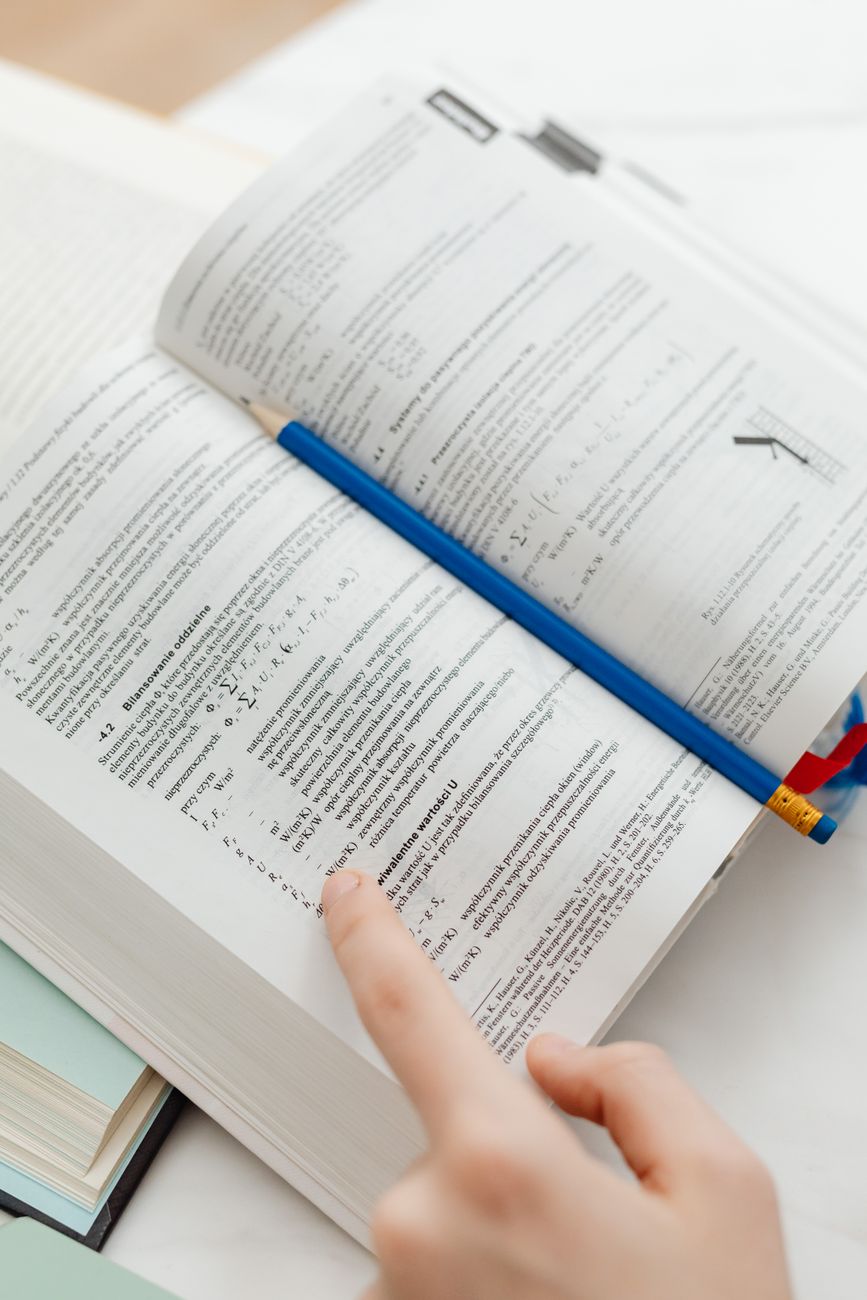
Every student has experienced this situation: you spend hours reading the same chapter, feel confident while the book is open, but struggle to remember the concepts during a test.
This happens because reading is not the same as remembering.
One of the biggest debates in education is Active Recall vs Re-Reading. While re-reading helps you become familiar with information, cognitive science consistently shows that actively retrieving information from memory is generally more effective for long-term retention.
That doesn’t mean re-reading has no value. It is useful when learning a topic for the first time or clarifying difficult concepts. However, once you’ve understood the basics, active recall becomes a much stronger revision strategy.
In this guide, you’ll learn:
- What active recall and re-reading are
- The science behind the testing effect
- The blank-page recall technique
- A practical revision frequency schedule
- Common mistakes students make
- How to combine both methods for better exam preparation
Understanding Active Recall vs Re-Reading
Before deciding which method to use, it’s important to understand how they differ.
What Is Re-Reading?
Re-reading means reviewing the same notes, textbook, or highlighted material multiple times.
It creates familiarity, making students feel they know the content. However, familiarity doesn’t always translate into long-term memory.
What Is Active Recall?
Active recall requires you to retrieve information from memory without looking at your notes.
Examples include:
- Solving questions
- Explaining concepts aloud
- Writing everything you remember
- Flashcards
- Practice tests
Every time you successfully retrieve information, the memory becomes stronger.
Active Recall vs Re-Reading: A Quick Comparison
| Feature | Active Recall | Re-Reading |
|---|---|---|
| Improves long-term memory | ✅ Excellent | Moderate |
| Helps identify weak areas | ✅ Yes | Limited |
| Best for first learning | Sometimes | ✅ Yes |
| Builds exam confidence | ✅ Yes | Moderate |
| Time efficiency | High | Lower |
| Supported by learning research | Strongly | Limited |
The best strategy is not choosing one over the other—it is knowing when to use each.
The Science Behind the Testing Effect
One of the strongest findings in cognitive psychology is the testing effect.
The testing effect refers to the improvement in learning that occurs when students retrieve information instead of simply reviewing it.
Each successful retrieval strengthens the memory pathway, making future recall easier.
This is why taking practice tests often improves learning more than repeatedly reading the same chapter.
For students preparing for JEE, NEET, MHT-CET, and board examinations, regular self-testing is one of the most effective ways to improve retention.
Why Re-Reading Alone Often Feels Misleading
Many students believe they know a chapter because it looks familiar.
This is called the illusion of competence.
When your textbook is open:
- Definitions look familiar.
- Formulas seem obvious.
- Examples appear easy.
However, when the book is closed, recalling the same information becomes much more difficult.
Exams measure retrieval—not recognition.
That’s why active recall is essential during revision.
When Re-Reading Is Still Useful
Although active recall is generally more effective for revision, re-reading has important uses.
Use re-reading when:
- Learning a chapter for the first time
- Understanding difficult theory
- Clarifying confusing concepts
- Reviewing teacher’s notes before practising questions
- Refreshing forgotten material after a long break
Once you’ve understood the content, transition to active recall as soon as possible.
The Blank-Page Recall Method
One of the simplest active recall techniques is the blank-page method.
Step 1
Study a topic carefully.
Understand the concepts rather than memorising sentences.
Step 2
Close your book.
Remove all notes from your desk.
Step 3
Take a blank sheet of paper.
Write everything you remember.
Include:
- Definitions
- Diagrams
- Formulas
- Examples
- Important points
Step 4
Compare your answers with the textbook.
Highlight:
- Missing concepts
- Incorrect information
- Weak areas
Step 5
Repeat after a short interval.
Each attempt improves long-term retention.
This method is especially effective for Biology diagrams, Chemistry reactions, Physics formulas, and Mathematics concepts.
A Smart Revision Frequency Schedule
Learning improves when revision is spaced over time.
Here’s a practical schedule.
| Revision | When to Revise |
|---|---|
| First Revision | Within 24 hours |
| Second Revision | After 3 days |
| Third Revision | After 7 days |
| Fourth Revision | After 14 days |
| Fifth Revision | After 30 days |
| Final Revision | Before the exam |
Each revision should include active recall rather than passive reading.
A Study Workflow That Combines Both Methods
Instead of choosing one technique, combine them.
Step 1
Read a new topic.
Step 2
Understand the concepts.
Step 3
Close the book.
Step 4
Use active recall.
Step 5
Solve practice questions.
Step 6
Review mistakes.
Step 7
Repeat using spaced revision.
This cycle builds stronger memory than repeated reading alone.
Common Mistakes Students Make
Avoid these habits.
❌ Highlighting entire chapters
❌ Reading notes repeatedly without testing yourself
❌ Revising only before exams
❌ Ignoring weak topics
❌ Memorising without understanding
❌ Skipping practice questions
❌ Revising everything on the same day
Small improvements in study habits can produce significant improvements in exam performance.
Applying Active Recall for JEE, NEET & MHT-CET
Each exam requires slightly different retrieval strategies.
JEE
- Solve concept-based numericals.
- Derive formulas without notes.
- Explain problem-solving steps aloud.
NEET
- Recall NCERT facts.
- Label Biology diagrams from memory.
- Solve chapter-wise MCQs.
MHT-CET
- Practise rapid MCQs.
- Recall formulas without looking.
- Review mistakes after mock tests.
Student Checklist
Before finishing your study session, ask yourself:
✔ Did I test myself today?
✔ Did I close my book before revising?
✔ Did I write concepts from memory?
✔ Did I solve practice questions?
✔ Did I identify weak areas?
✔ Did I schedule my next revision?
✔ Did I revise using active recall instead of only reading?
How Khandelwal Classes Helps Students Learn More Effectively
At Khandelwal Classes, we encourage students to use evidence-based learning strategies alongside structured academic preparation. Through regular tests, chapter-wise MCQs, concept discussions, doubt-solving sessions, and mock test analysis, students learn how to retrieve information effectively instead of relying on passive revision.
This approach strengthens confidence, improves retention, and prepares students for board examinations as well as competitive exams like JEE, NEET, and MHT-CET.
Conclusion
The debate around Active Recall vs Re-Reading isn’t about choosing one method forever—it’s about using each at the right stage of learning.
Re-reading helps you understand new concepts, while active recall helps you remember and apply them. When combined with spaced revision and regular practice, these techniques create a powerful study system that improves both confidence and long-term retention.
Study smarter, revise consistently, and let every revision session strengthen your preparation for success.
Internal Links
- https://khandelwalclasses.com/2026/07/23/animal-kingdom-classification-for-neet/
- https://khandelwalclasses.com/2026/07/22/electrochemistry-for-jee/
- https://khandelwalclasses.com/2026/07/21/how-to-evaluate-coaching-classes/
- https://khandelwalclasses.com/2026/07/20/interleaving-technique-study-method/
- https://khandelwalclasses.com/2026/07/12/study-timetable-for-class-11/
- https://khandelwalclasses.com/courses-programs-2/
External References
FAQs
1. What is the difference between active recall and re-reading?
Active recall involves retrieving information from memory without looking at notes, while re-reading means reviewing the same material multiple times. Active recall is generally more effective for long-term retention.
2. Is re-reading completely ineffective?
No. Re-reading is useful for learning new concepts and clarifying difficult topics. It becomes less effective when used as the only revision strategy.
3. What is the testing effect?
The testing effect is a learning principle showing that retrieving information through self-testing strengthens memory more effectively than passive review.
4. How does the blank-page recall method work?
Study a topic, close your book, and write everything you remember on a blank page. Then compare your answers with your notes to identify gaps.
5. How often should I revise a chapter?
A practical schedule is within 24 hours, then after 3 days, 7 days, 14 days, 30 days, and again before the exam.
6. Can active recall help in JEE and NEET preparation?
Yes. It improves concept retention, identifies weak areas, and enhances problem-solving skills, making it valuable for competitive exams.
7. What is the biggest mistake students make while revising?
Many students repeatedly read their notes without testing themselves, creating a false sense of confidence instead of strengthening long-term memory.
Leave a Reply