

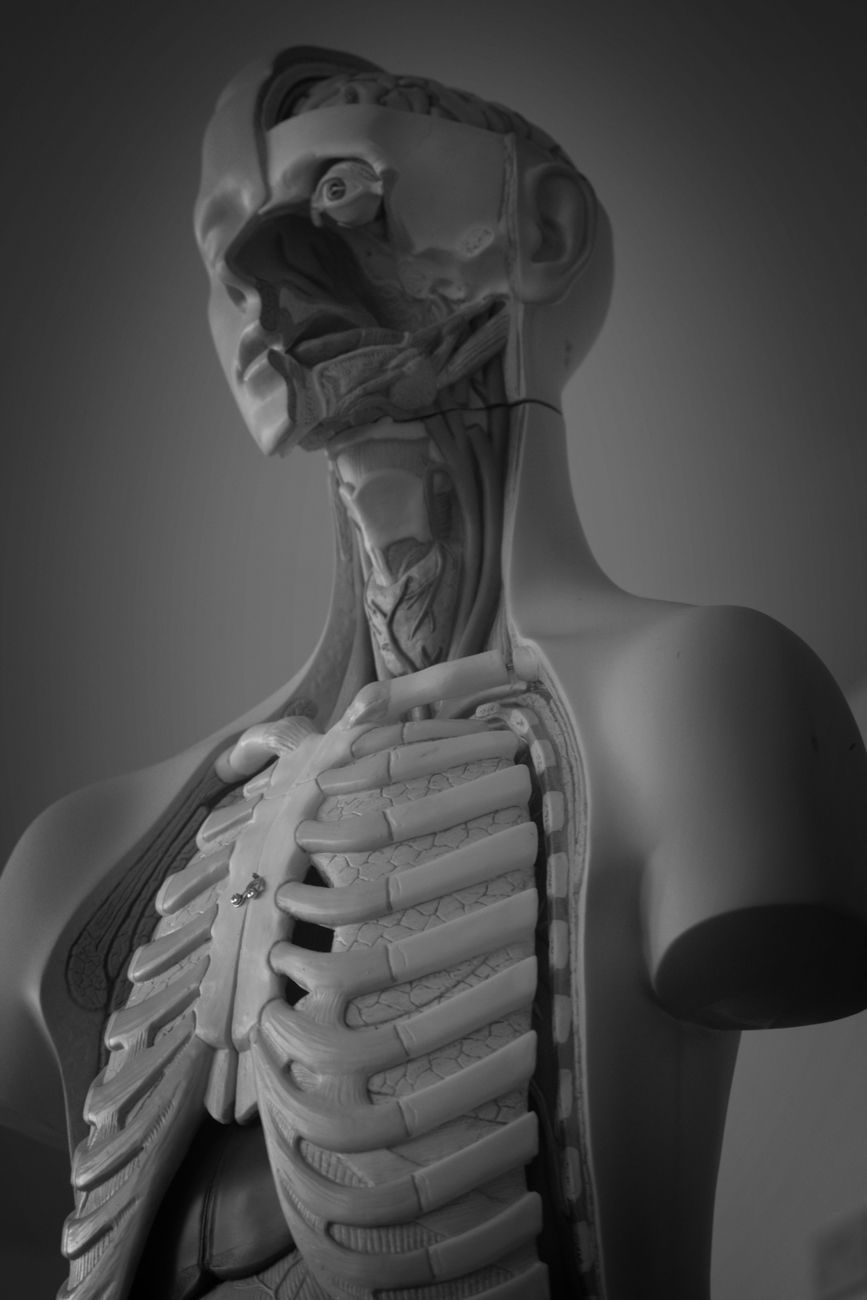
The Human Nervous System for NEET is one of the most important topics in Human Physiology.
It explains how the body:
- Receives information
- Processes signals
- Responds to stimuli
- Coordinates different activities
The nervous system controls both voluntary and involuntary functions.
For example, it helps you:
- Move your hand
- Read a question
- Feel pain
- Maintain balance
- Respond to heat
- Detect light and sound
NEET questions from this topic often test concepts rather than simple memorisation.
The most important areas include:
- Neural coordination
- Neuron structure
- Synaptic transmission
- Reflex action
- Reflex arc
- Sense organs
- Frequently tested factual details
A strong preparation strategy should connect these concepts.
The basic pathway is:
Stimulus → Receptor → Sensory Neuron → Central Nervous System → Motor Neuron → Effector → Response
Once this pathway becomes clear, many questions become easier to solve.
Why the Human Nervous System Is Important for NEET
This topic contains several concepts that are frequently tested through:
- Multiple-choice questions
- Statement-based questions
- Match-the-following questions
- Diagram-based questions
- Sequence-based questions
A question may ask you to identify:
- The correct part of a neuron
- The direction of nerve impulse
- The role of a synapse
- The sequence of a reflex arc
- The function of a sense organ
- The role of rods and cones
- The structure responsible for hearing or balance
Therefore, students should study this chapter in a connected manner.
Do not memorise isolated terms.
Instead, understand:
How a stimulus becomes a nerve signal and finally produces a response.
1. Understand the Structure of a Neuron
A neuron is the basic structural and functional unit of the nervous system.
A typical neuron contains:
- Cell body
- Dendrites
- Axon
- Axon terminals
Each part has a specific role.
Dendrites
Dendrites receive signals from:
- Receptors
- Other neurons
- Nearby cells
They carry information towards the cell body.
Cell Body
The cell body contains the nucleus and other important cell structures.
It helps maintain the neuron.
Axon
The axon carries the nerve impulse away from the cell body.
Some axons are covered by a myelin sheath.
The myelin sheath helps improve the speed of nerve impulse transmission.
Axon Terminals
Axon terminals transmit signals to:
- Another neuron
- A muscle
- A gland
This communication often takes place through a synapse.
2. How a Nerve Impulse Travels
A nerve impulse is an electrical signal that travels along the neuron.
The direction is generally:
Dendrites → Cell Body → Axon → Axon Terminals
This direction is important for NEET questions.
Students often confuse the direction of impulse transmission.
A simple way to remember it is:
Receive through dendrites. Send through the axon.
The movement of ions across the neuronal membrane helps create changes in electrical potential.
These changes allow the nerve impulse to travel along the neuron.
3. Synapse Mechanism: A High-Yield NEET Concept
A synapse is the junction between:
- Two neurons
- A neuron and a muscle
- A neuron and a gland
The space between two communicating cells is called the synaptic cleft.
In a chemical synapse, the signal passes through neurotransmitters.
Step-by-Step Synaptic Transmission
Step 1: The Impulse Reaches the Axon Terminal
The electrical signal travels along the neuron.
It eventually reaches the axon terminal.
Step 2: Calcium Channels Open
The arrival of the impulse causes calcium ions to enter the presynaptic terminal.
Step 3: Neurotransmitters Are Released
The calcium signal triggers the fusion of synaptic vesicles with the membrane.
Neurotransmitters are then released into the synaptic cleft.
Step 4: Neurotransmitters Cross the Synaptic Cleft
The neurotransmitter moves across the small gap.
Step 5: Receptors on the Next Cell Are Activated
The neurotransmitter binds to receptors on the postsynaptic membrane.
This can create a new electrical signal.
The complete sequence is:
Action Potential → Calcium Entry → Vesicle Fusion → Neurotransmitter Release → Receptor Activation
This sequence is important for NEET.
Chemical Synapse vs Electrical Synapse
There are two major types of synapses.
Chemical Synapse
Chemical synapses use neurotransmitters.
They contain a synaptic cleft.
The signal moves from one cell to another through chemical messengers.
Electrical Synapse
Electrical synapses allow direct electrical communication between cells.
The signal transmission is generally faster.
For NEET, remember the basic difference:
Chemical synapses use neurotransmitters, while electrical synapses allow direct electrical communication.
4. Reflex Action and Reflex Arc
A reflex action is a quick and automatic response to a stimulus.
For example:
- Pulling your hand away from a hot object
- Closing your eyes when something approaches them
- Quickly withdrawing from a painful stimulus
A reflex action does not require conscious decision-making before the response begins.
The neural pathway involved in a reflex action is called a reflex arc.
Reflex Arc Pathway
The basic sequence is:
Receptor → Sensory Neuron → Central Nervous System → Motor Neuron → Effector
The pathway may also include an interneuron.
A typical reflex arc includes:
- Receptor
- Sensory neuron
- Interneuron
- Motor neuron
- Effector
The effector may be:
- A muscle
- A gland
Reflex Arc: Step-by-Step
Step 1: A Stimulus Is Detected
A receptor detects a stimulus.
For example, a pain receptor detects excessive heat.
Step 2: The Sensory Neuron Carries the Signal
The sensory neuron carries the impulse towards the central nervous system.
Step 3: The Signal Is Processed
The spinal cord or another part of the central nervous system processes the information.
Step 4: The Motor Neuron Carries the Response
The motor neuron carries the signal towards the effector.
Step 5: The Effector Responds
The muscle contracts or the gland releases a secretion.
This produces the response.
The complete sequence is:
Stimulus → Receptor → Sensory Neuron → CNS → Motor Neuron → Effector → Response
This sequence is one of the most important parts of the topic.
Reflex Action vs Voluntary Action
| Reflex Action | Voluntary Action |
|---|---|
| Fast response | Usually slower |
| Automatic | Conscious |
| Often involves the spinal cord | Mainly controlled by the brain |
| Protects the body from danger | Performed intentionally |
However, the brain can receive information about a reflex action after the response has already begun.
Therefore, the spinal cord can help produce a rapid response.
5. Human Sense Organs
Sense organs help the body detect changes in the environment.
The major sense organs include:
- Eye
- Ear
- Nose
- Tongue
- Skin
Each organ contains specialised receptors.
These receptors detect specific types of stimuli.
6. The Human Eye
The eye is the organ responsible for vision.
Important parts include:
- Cornea
- Iris
- Pupil
- Lens
- Retina
- Optic nerve
Cornea
The cornea is the transparent front part of the eye.
It helps refract incoming light.
Iris
The iris controls the size of the pupil.
It contains muscles that regulate the amount of light entering the eye.
Pupil
The pupil is the opening through which light enters the eye.
Its size changes depending on light intensity.
Lens
The lens helps focus light on the retina.
The lens can change its shape during accommodation.
Retina
The retina contains photoreceptor cells.
The two major types are:
- Rods
- Cones
Optic Nerve
The optic nerve carries visual information from the eye towards the brain.
7. Rods and Cones
Rods and cones are photoreceptors.
They have different functions.
Rods
Rods are important for:
- Dim-light vision
- Black-and-white vision
They are highly sensitive to low levels of light.
Cones
Cones are important for:
- Colour vision
- Bright-light vision
- Detailed vision
A common NEET question asks students to distinguish between rods and cones.
Remember:
Rods help with dim-light vision. Cones help with colour and detailed vision.
8. Accommodation of the Eye
Accommodation is the ability of the eye lens to change its shape.
This allows the eye to focus on objects at different distances.
For nearby objects, the lens becomes more rounded.
For distant objects, the lens becomes flatter.
The ciliary muscles help control these changes.
This topic is often connected with:
- Near vision
- Far vision
- Lens shape
- Focusing
Students should understand the relationship instead of memorising it as an isolated fact.
9. The Human Ear
The ear is involved in:
- Hearing
- Balance
It has three major regions:
- External ear
- Middle ear
- Inner ear
External Ear
The external ear collects sound waves.
The pinna helps direct sound into the auditory canal.
Middle Ear
The middle ear contains small bones called ossicles.
These bones help transmit vibrations.
The three ossicles are:
- Malleus
- Incus
- Stapes
A useful memory aid is:
MIS
Malleus → Incus → Stapes
Inner Ear
The inner ear contains structures involved in:
- Hearing
- Balance
The cochlea is important for hearing.
The vestibular apparatus helps maintain balance.
10. Hearing Pathway
The basic sequence is:
Sound Waves → Ear Canal → Eardrum → Ossicles → Inner Ear → Auditory Nerve → Brain
The eardrum vibrates in response to sound waves.
These vibrations are transmitted through the ossicles.
The inner ear converts the mechanical signal into a neural signal.
The auditory nerve then carries the information to the brain.
11. Balance and the Vestibular Apparatus
The inner ear helps maintain body balance.
The vestibular apparatus detects changes in:
- Head position
- Movement
- Acceleration
This information helps the brain coordinate body posture.
Questions may test the difference between:
- Hearing
- Balance
Remember:
The cochlea is primarily associated with hearing, while the vestibular apparatus is associated with balance.
12. Twenty Frequently Tested Sense Organ Facts
These facts are useful for quick NEET revision.
1. The Retina Contains Photoreceptors
Rods and cones are present in the retina.
2. Rods Help with Dim-Light Vision
Rods are more sensitive to low light.
3. Cones Help with Colour Vision
Cones function best in brighter light.
4. The Iris Controls Pupil Size
The iris regulates the amount of light entering the eye.
5. The Pupil Is an Opening
It is not a solid structure.
6. The Lens Helps Focus Light
The lens helps form a focused image on the retina.
7. Ciliary Muscles Help in Accommodation
They change the shape of the lens.
8. The Optic Nerve Carries Visual Signals
It connects the eye with the brain.
9. The Cornea Refracts Light
It is an important refractive surface of the eye.
10. The Ear Helps with Hearing and Balance
It has functions beyond hearing.
11. The Ossicles Are in the Middle Ear
They transmit sound vibrations.
12. Malleus, Incus, and Stapes Are the Ossicles
Their order is important.
13. The Cochlea Is Associated with Hearing
It is located in the inner ear.
14. The Vestibular Apparatus Helps with Balance
It detects changes related to body movement and position.
15. The Auditory Nerve Carries Hearing Signals
It carries neural information towards the brain.
16. The Pinna Collects Sound Waves
It helps direct sound into the auditory canal.
17. The Eardrum Vibrates
It responds to incoming sound waves.
18. Sensory Receptors Detect Stimuli
They convert environmental changes into signals.
19. The Nervous System Processes Information
It coordinates responses to stimuli.
20. Reflex Actions Are Rapid Responses
They help protect the body from harmful stimuli.
These facts are simple.
However, NEET questions may combine several of them in one question.
Therefore, students should understand their relationships.
13. Common NEET Question Patterns
Pattern 1: Neuron Structure
The question may ask you to identify:
- Dendrites
- Axon
- Cell body
- Axon terminals
Best Strategy
Learn the direction of impulse transmission.
Pattern 2: Synapse Sequence
The question may ask you to arrange the steps of synaptic transmission.
Remember:
Impulse → Calcium Entry → Neurotransmitter Release → Receptor Activation
Pattern 3: Reflex Arc Sequence
The question may provide different components in random order.
Arrange them as:
Receptor → Sensory Neuron → CNS → Motor Neuron → Effector
Pattern 4: Eye Structure and Function
Questions may match:
- Iris
- Pupil
- Lens
- Retina
- Optic nerve
with their functions.
Pattern 5: Rods and Cones
Questions often compare:
- Dim-light vision
- Colour vision
- Bright-light vision
Remember their different functions.
Pattern 6: Ear Structure
Questions may ask about:
- Ossicles
- Cochlea
- Vestibular apparatus
- Auditory canal
Learn the function of each structure.
Pattern 7: Hearing Pathway
Questions may test the order in which sound vibrations travel through the ear.
Pattern 8: Balance
Questions may ask which part of the ear helps maintain balance.
Focus on the vestibular apparatus.
Pattern 9: Reflex vs Voluntary Response
Questions may compare:
- Speed
- Conscious control
- Neural pathway
Read each statement carefully.
Pattern 10: Statement-Based Questions
Several statements may be given about the nervous system.
One or more may be incorrect.
Pay special attention to words such as:
- Only
- Always
- Never
- Directly
- Exclusively
These words can change the meaning of a statement.
14. How to Study the Human Nervous System for NEET
First Reading: Understand the Flow
Begin with the overall pathway:
Stimulus → Receptor → Neural Signal → CNS → Response
Then study the individual structures.
This prevents the chapter from becoming a collection of disconnected facts.
Second Reading: Create Comparison Tables
Prepare tables for:
- Rods vs cones
- Reflex vs voluntary action
- Chemical vs electrical synapses
- Eye structures
- Ear structures
Tables make revision faster.
Third Step: Practise Diagrams
Practise drawing:
- A neuron
- A reflex arc
- The human eye
- The human ear
Diagrams help you remember:
- Structure
- Position
- Function
- Connections
Fourth Step: Use Active Recall
Close your book and answer:
- What is the direction of a nerve impulse?
- What happens at a synapse?
- What is the sequence of a reflex arc?
- What is the function of rods?
- What is the function of cones?
- Which ear structure helps with balance?
This is more effective than repeatedly reading the same page.
15. Common Mistakes Students Make
Mistake 1: Memorising Structures Without Functions
Do not only learn the names.
Connect each structure with its function.
Mistake 2: Confusing Rods and Cones
Rods are associated with dim-light vision.
Cones are associated with colour and detailed vision.
Mistake 3: Mixing Up the Reflex Arc Sequence
Always remember:
Receptor → Sensory Neuron → CNS → Motor Neuron → Effector
Mistake 4: Confusing Cochlea and Vestibular Apparatus
The cochlea is mainly related to hearing.
The vestibular apparatus is mainly related to balance.
Mistake 5: Ignoring Diagrams
Many Biology questions become easier when you understand the diagram.
Practise the important diagrams regularly.
A Seven-Day Revision Plan
Day 1: Neuron and Neural Coordination
Study:
- Neuron structure
- Nerve impulse
- Synapse
Day 2: Synaptic Transmission
Revise:
- Chemical synapse
- Electrical synapse
- Neurotransmitters
Day 3: Reflex Action
Study:
- Reflex action
- Reflex arc
- Sensory and motor pathways
Day 4: Human Eye
Revise:
- Eye structure
- Retina
- Rods
- Cones
- Accommodation
Day 5: Human Ear
Study:
- Hearing pathway
- Ossicles
- Cochlea
- Vestibular apparatus
Day 6: Sense Organ Facts
Revise the 20 high-yield facts.
Day 7: MCQ Practice
Solve mixed questions and analyse every mistake.
How to Improve Your NEET Biology Score from This Topic
A good strategy has three stages.
Stage 1: Understand
Learn the mechanism.
For example:
How does a stimulus produce a response?
Stage 2: Organise
Create:
- Flowcharts
- Tables
- Diagrams
- Comparison notes
Stage 3: Test
Solve:
- Direct MCQs
- Statement-based questions
- Match-the-following questions
- Diagram-based questions
This three-step approach is more effective than passive reading.
Conclusion
The Human Nervous System is a high-value topic for NEET Biology.
The most important areas include:
- Neuron structure
- Neural coordination
- Synaptic transmission
- Reflex arc
- Human eye
- Human ear
- Rods and cones
- Hearing and balance
The best way to prepare is to connect structure with function.
Remember the central pathway:
Stimulus → Receptor → Sensory Neuron → CNS → Motor Neuron → Effector → Response
Then revise the important sense organ facts and practise recurring MCQ patterns.
With regular revision and diagram practice, the Human Nervous System can become a strong scoring area in NEET Biology.
FAQs
1. Is the Human Nervous System important for NEET?
Yes. Neural coordination, reflex actions, and sense organs are important areas of NEET Biology preparation.
2. What is the reflex arc?
A reflex arc is the neural pathway through which a reflex action occurs. It generally includes a receptor, sensory neuron, central nervous system, motor neuron, and effector.
3. What is the difference between rods and cones?
Rods help with dim-light vision. Cones help with colour vision and detailed vision in brighter light.
4. What is the function of a synapse?
A synapse allows communication between neurons or between a neuron and another target cell.
5. Which part of the ear helps with hearing?
The cochlea is primarily associated with hearing.
6. Which part of the ear helps maintain balance?
The vestibular apparatus helps detect movement and maintain balance.
7. How should I study the nervous system for NEET?
Understand the pathways, create structure-function tables, practise diagrams, and solve statement-based and diagram-based MCQs.
8. How can I remember the reflex arc?
Use the sequence:
Receptor → Sensory Neuron → CNS → Motor Neuron → Effector
Internal Links
- Digestion and Absorption for NEET
- Human Endocrine System for NEET
- Animal Kingdom Classification for NEET
- Active Recall vs Re-Reading
- Efficient Study Habits
Leave a Reply